

• About

The Naked Theologian

~ A blog for stripped-down theology

The Naked Theologian

Monthly Archives: February 2009

#12 God without clothes: what would s/he look like?

26 Thursday Feb 2009

Posted by TheNakedTheologian in God, Philosophy of Religions, Prayer, Religion, Religious Philosophy, Theology

≈ 4 Comments

dreamstime_3677269

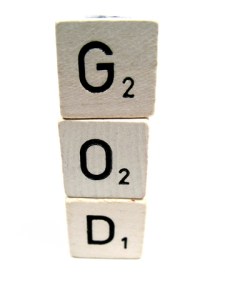
Is God unknowable, beyond the possibility of the human mind to comprehend? There are plenty of good reasons to be intentional about keeping God abstract.  To preserve the one God as a word of appeal for every person, regardless of whether that person is male or female, is most easily achieved by denying that God has either male or female characteristics.  Even so, if we’re honest, we usually find ways to give that concept some human-like characteristics.  We, human beings, prefer gods that look, talk, feel, and think like us.  Because if God doesn’t have something in common with us, exactly how are we supposed to relate to God?

In technical-speak, we anthropomorphize God—we give God human characteristics.  When we want a personal relationship with a personal God, our god will have something in common with us.  Christianity’s god-man, Jesus, offers the possibility of such a connection.  So does polytheism’s many gods.  If we’re female, we might find it more comfortable to talk to, or pray to, a god we visualize as female.  Or if we’re feminists (male or female), we might consider females to be superior to males and God will be female.  Or maybe we simply prefer a god who is mother-like, with all of the stereotypical attributes of the perfectly matronly-matron:  you know, warm, unconditionally loving, benevolent, concerned, tender, soft, gentle, etc.  Imagine a female god who’s like the mother we have (or wish we had) but even better—mother-gods never, ever get crabby! 

So powerful is the urge to imagine God as female that Jewish rabbis, in spite of Judaism’s resistance to anthropomorphizing God, sometimes used the name Shekhinah for God in the Talmud.  Shekhinah is a feminine form of the Hebrew root-word meaning “to dwell” and so, the name Shekhinah denotes “God’s indwelling presence.”  After the exile of Jews from the Holy Land and the destruction of Jerusalem’s Temple in 70 CE, the rabbis taught that the Shekhinah shared the people’s suffering and grieved with them.   As for Christians, during the Middle Ages, they turned to the Virgin Mary in ever greater numbers, looking for comfort and solace during a time when Church doctrine made Christ less of a concerned intercessor and more of a retributive judge.  Mary continues to play an important role; for some Catholics she’s almost a fourth person in the godhead.

But the burning question remains—if we insist that God is radically unitary, do we resist the urge to anthropomorphize God or do we decide we’re okay with God having male or female attributes? 

If we really must anthropomorphize, then we can have our cake and eat it too by following the lead of the Talmudic rabbis.  They recommend qualifying our metaphors for God with the phrase:  “if it were really possible [to say such a thing]”.  We would then talk about how God is like a mother “if it were really possible to say such a thing.”  Granted, this phrase gets clunky, especially when praying.  Or we could follow the approach of the 6th century Christian theologian known as Pseudo-Dionysius, and adopt the habit of negating any positive, or concrete, thing we say about God.  How does that work exactly?  Like this:  “God is a mother and isn’t a mother. Such a linguistic device indicates how God is not only beyond motherhood but God is also beyond non-motherhood; God transcends all predicates.

Whether God is male or female or neither (if it is really possible to say that God is either male or female), may God bless you (if it is really possible to say that God blesses).  

Reference:  Louis Jacob, “God:  God in Postbiblical Judaism,” in Encyclopedia of Religion, 2nd ed., 3547-3552 (New York: Macmillan Reference USA, 2004), 3548. 
#11 What’s in a name? God, G-d, G*d

19 Thursday Feb 2009

Posted by TheNakedTheologian in God, Philosophy of Religions, Prayer, Religion, Theology

≈ 12 Comments

dreamstime_64650281A quick glance at a few different faith traditions shows just how many ways there are to speak about the divine.  For example, some traditional Jews won’t say the word God because they believe that it is too holy to pronounce. One is forbidden from making any representations of God—even in speech.  When reading the Bible out loud, one is to replace the Hebrew word for G-d with the word Adonai, meaning Lord.

Sister Nancy Corcoran, a Catholic nun, argues against using the word, Lord, although it is a common word in Christian prayer as well as Jewish prayer.  For her, the term Lord does make a representation—of a male God (notice, though, how the adjective “male” had to appear in front of the word, God, to indicate God had a gender).  Sister Corcoran is an advocate of the name for God developed by Elisabeth Schussler Fiorenza, a Professor of Divinity at Harvard University Divinity School.  Taking a similar approach to that of Orthodox Jews, “Schussler Fiorenza prefers the spelling G*d because it suggests that, as humans, our ideas of and names for God are ambiguous and inadequate.  It also allows for a God without male or female characteristics.” 

How does Fiorenza pronounce the word G*d?  This word looks as un-pronounce-able as the symbol used as a name for three years by the musician Prince.  Unclear also are the reasons why, for Fiorenza, the word God necessarily suggests male or female characteristics.  Certainly, many theologians and philosophers throughout the ages have not associated male or female characteristics with this word (like Fiorenza, they’ve also argued that our ideas of God are ambiguous and inadequate but, unlike her, they did not argue we should abandon the word).  Okay, sure, the Bible refers to God as Him, but today, pronouns are often eliminated by sensitive theologians and philosophers (even if this sometimes results in awkward sentences).  Take, for example, the sentence:  “God wants you to love others as much as you love yourself or God’s Self.” 

Just like we use the single word, actor, to refer to either a female (formerly known as an actress) or a male actor, the single word, god, can refer to a female god, a male god, a god without gender, a god with both genders, etc. (in the last two cases, the analogy with the word, actor, fails!).  Unlike the word, Goddess, which does imply gender, the word, God, does not.  Thanks to its plasticity, it is the superior choice.  So why mess with it?

HNFFT (Her Nakedness’ Food for Thought):  What do you call God?  Does it imply has a gender?  Can it serve as the word of appeal for anyone, male or female?

References:  Nancy Corcoran.  A Multifaith Guide to Creating Personal Prayer in Your Life (Woodstock, VT:  Skylight Paths, 2007), 119.

#10 God, will You be my Valentine?

10 Tuesday Feb 2009

Posted by TheNakedTheologian in God, Religion, Theology

≈ 1 Comment

dreamstime_72297991

On this Valentine’s Day, or any other day, do you find yourself alone, fingers pressed against your lower lip, whispering breathlessly, “Would only that He would kiss me with the kisses of His mouth!  Would that His left hand were under my head, and His right hand embrace me!  Surely, His love is better than wine.”  Are you longing for God?  Pining for God-the-lover?  Yearning for the divine lover?  

Love-longing, love-pining, love-yearning for God is as old as the Bible itself.

How laced the words of mystics have been with the raw language of desire for God, the beloved lover:  “Please God.  Please let me see Your face, let me hear Your voice; for Your voice is sweet, and Your face is lovely.”  No, nothing new here.  So far, most of this post’s longing, pining, yearning phrases have been lifted right from the Hebrew Bible’s Song of Solomon, also called the Song of Songs.  For many Jews, this sensual love song is an allegory for God’s love for Israel, but Christian mystics like Bernard of Clairvaux have interpreted it as a sizzling tale of betrothal (made and lost) between a person and God.  The twentieth-century Jewish philosopher, Franz Rosenzweig, drew heavily upon the Song of Songs as he sought to understand his personal relationship with God. 

Indeed, for some, love for God is imbued with passionate ardor. Take Mechthild of Magdeburg, a medieval mystic. Her spiritual life unfolds in several stages and the last stage is–yes, a night of love. Burning with desire for God, trembling with longing, Mechthild ascends towards God, moving ever closer in a “flight of love”, until she, at long last, reaches the One she seeks and unites with Him in a supreme moment of ecstasy.  Face to face with this wonder, she “forgets the earth”; she embraces Him, becoming one with Him “as water mingles with wine”;  she wants nothing any more except to remain in God’s embrace until her last breath, joined to Him without end, without measure, without pause. 

Although, for many mystics, it is the human who is restless with love for God, Mechthild “introduced the anguish of desire in God.”  God is sick with love for her.  God burns with desire and looks upon her soul as “a stream in which to cool His ardor.”

As if the prose hasn’t yet been hot, hot, hot enough, Mechthild’s love-sick soul pleads with God to “Cover me with the cloak of your long desire,” “for where two burning desires encounter, there love is perfect.”

Sadly, Mechthild’s rapturous ardor fades away.  For her, the way of love with God “is transitory in this life.”  She observes, from bitter experience, that “This cannot last long.”  

And since there’s nothing new under the sun, there’s a passage in the Song of Songs where the fiancee, abandoned by her lover, seeks, in tears, the one she still loves.

Questions:  Do you love God?  Do you love God erotically?  If you texted God a love note, what would you say?

For those of you who would make God your Valentine, may your pursuit be short and your romance long-lived.

As a Valentine’s Day gift, this post closes with Peter Gabriel‘s lyrics to the song “In Your Eyes,” lyrics about his love for God.

“In Your Eyes”

love I get so lost, sometimes
days pass and this emptiness fills my heart
when I want to run away
I drive off in my car
but whichever way I go
I come back to the place you are

all my instincts, they return
and the grand facade, so soon will burn
without a noise, without my pride
I reach out from the inside

in your eyes
the light the heat
in your eyes
I am complete
in your eyes
I see the doorway to a thousand churches
in your eyes
the resolution of all the fruitless searches
in your eyes
I see the light and the heat
in your eyes
oh, I want to be that complete
I want to touch the light
the heat I see in your eyes

love, I don’t like to see so much pain
so much wasted and this moment keeps slipping away
I get so tired of working so hard for our survival
I look to the time with you to keep me awake and alive

and all my instincts, they return
and the grand facade, so soon will burn
without a noise, without my pride
I reach out from the inside

in your eyes
the light the heat
in your eyes
I am complete
in your eyes
I see the doorway to a thousand churches
in your eyes
the resolution of all the fruitless searches
in your eyes
I see the light and the heat
in your eyes
oh, I want to be that complete
I want to touch the light,
the heat I see in your eyes
in your eyes in your eyes

References:  Emilie Zum Brunn and Georgette Epiney-Burgard, Women Mystics in Medieval Europe, trans. Sheila Hughes (St. Paul, MN:  Paragon House, 1989), 48-9.

#9 Build-a-prayer workshop

05 Thursday Feb 2009

Posted by TheNakedTheologian in God, Prayer, Religion, Theology

≈ Leave a comment

dreamstime_7260924Your views on God (your theology) affect what you say when you pray.  Not sure what to call God when you pray?  Not sure how to start your prayers?  Not even sure how to pray? 

Here are three steps to help you come up with your own prayers and discover your theology at the same time.  Yup.  You get two for the price of one.

1.            In the list below, circle all the words for God that most appeal to you.  This list mostly duplicates one developed by Sister Nancy Corcoran (a Catholic nun).

The All-Compassionate, the All-Merciful, the Absolute Ruler, the Pure One, the Source of Peace, the Inspirer of Faith, the Guardian, the Victorious, the Compeller, the Creator, the Maker of Order, the Shaper of Beauty, the Forgiving, the Subduer, the Giver of All, the Sustainer, the Opener, the Knower of All, the Constrictor, the Reliever, the Abaser, the Exalter, the Bestower of Honors, the Humiliator, the Hearer of All, the Seer of All, the Judge, the Just, the Subtle One, the All-Aware, the Forbearing, the Magnificent, the Forgiver and Hider of Faults, the Rewarder of Thankfulness, the Highest, the Greatest, the Preserver, the Nourisher, the Accounter, the Mighty, the Generous, the Watchful One, the Responder to Prayer, the All-Comprehending, the Perfectly Wise, the Loving One, the Majestic One, Breath of Life, the Resurrection, the Witness, the Truth, the Trustee, the Possessor of All Strength, the Good, the Appraiser, the Originator, the Restorer, the Giver of Life, the Taker of Life, the Ever Living One, the Self-Existing One, the Finder, the Glorious, the Only One, the One, the Satisfier of All Needs, The Gracious One, the All Powerful, the Creator of All Power, the Expediter, the Delayer, the First, the Last, the Manifest One, the Hidden One, the Protecting Friend, the Supreme One, the Doer of Good, the Guide to Repentance, the Avenger, the Forgiver, the Clement, the Owner of All, the Lord of Majesty and Bounty, the Equitable One, the Gatherer, the Rich One, the Enricher, the Preventer of Harm, the Creator of the Harmful, the Creator of Good, the Light, the Guide, the Originator, the Everlasting One, the One Who Is Present and Has Always Been and Always Will Be Present, the Inheritor of All, the Righteous Teacher, the Lawgiver, the Patient One.

2.            Add other words for God that appeal to you but don’t appear in the list.

3.            Rewrite the following three prayers by substituting the words for God with the ones you prefer (and also by changing phrases as you see fit).  Or choose other prayers, even ones whose theology strike you as vastly different from your own.  The effort of rewriting different kinds of prayers will help you discover your theology because it’ll help you figure out what ways of talking to God work for you and which don’t.

Prayer A:            O God whom humans have called the unknowable, whom they have sought in unfamiliar ways of thought and have come back empty-handed, let us see how much You are the God of common things and of every day experience, the God who is near and not far off.  For surely, You are not only the end of the quest but the beginning, not the reward of life’s pilgrimage alone but its companion hope.  Help us, if we cannot see You in the splendor of the sphere to see You in the miracle of every flower that grows, and when we need the strength and solace of Your love, let us seek it in one another.  (prayer written by the Unitarian minister, Rev. A. Powell Davies) 

Prayer B:            O God, You have called us into life, and set us in the midst of purposes we cannot measure or understand.  Yet we thank You for the good we know, for the life we have, and for the gifts that are our daily portion: 

For health and healing, for labor and repose, for the ever-renewed beauty of earth and sky, for thoughts of truth and justice which stir us from our ease and move us to acts of goodness, and for the contemplation of Your eternal presence, which fills us with hope that what is good and lovely cannot perish.  (Jewish Reform prayer)

Prayer C:            God of our weary years, God of our silent tears, Thou who has brought us thus far on the way; Thou who has by Thy might led us into the light, keep us forever in the path, we pray.  Lest our feet stray from the places, our God, where we met Thee, lest our hearts drunk with the wine of the world, we forget Thee, shadowed beneath Thy hand, may we forever stand, true to our God, true to our native land.  (often called the African-American anthem, prayed by the Reverend James Lowery at President Obama’s Inauguration) 

For more naked chat about prayer, visit this post,  #8 Prayer:  getting intimate with God.

References:  1) Nancy Corcoran.  A Multifaith Guide to Creating Personal Prayer in Your Life (Woodstock, VT: Skylight Paths, 2007), 119;  2) Prayer A:  A. Powell Davies, The Language of the Heart: A Book of Prayers by A. Powell Davies (Washington, DC:  All Souls Unitarian Church, 1956), 114;  3) Prayer B:  The Gates of Prayer, The New Union Prayerbook (New York:  Central Conference of Rabbis, 1975), 670; 4) Prayer C:  James Weldon Johnson, “Lift Every Voice and Sing,” Hymn #149 in Singing the Living Tradition (Boston, Beacon Press, 1993).

The Naked Theologian

Unknown's avatar

Enter your email address to follow this blog and receive notifications of new posts by email.

Top Posts

  • #74 After the "Death of God," new gods?
  • #73 Will Her Methodist Faith Help HRC Make a Comeback?
  • #72 Trump's White Evangelical Voters: What Were They Thinking?

Recent Posts

  • #74 After the “Death of God,” new gods?
  • #73 Will Her Methodist Faith Help HRC Make a Comeback?
  • #72 Trump’s White Evangelical Voters: What Were They Thinking?

Recent Comments

Tulayhah's avatarTulayhah on #69 How To Read the Qur…
clinton's avatarclinton on #18 God and the Devil duke it…
marysedl's avatarmarysedl on #72 Trump’s White Evange…
DaCoot's avatarDaCoot on #11 What’s in a name? Go…
Home And Spirit's avatarHome And Spirit on #68 Suffering on Trial

Categories

Ethics God Philosophy of Religion Prayer Religion Religious Philosophy Spiritual Exercises Spirituality Theological Ethics Theology

Posts by Category

  • Ethics (15)
  • God (55)
  • Interpretation (1)
  • Philosophy (5)
  • Philosophy of Religion (27)
  • Philosophy of Religions (8)
  • Politics (1)
  • Prayer (11)
  • Religion (57)
  • Religious Philosophy (26)
  • Spiritual Exercises (9)
  • Spirituality (15)
  • Theological Ethics (26)
  • Theology (55)

Archives

Follow me on Twitter

My Tweets

Blog at WordPress.com.

Privacy & Cookies: This site uses cookies. By continuing to use this website, you agree to their use.
To find out more, including how to control cookies, see here: Cookie Policy
  • Subscribe Subscribed
    • The Naked Theologian
    • Join 67 other subscribers
    • Already have a WordPress.com account? Log in now.
    • The Naked Theologian
    • Subscribe Subscribed
    • Sign up
    • Log in
    • Report this content
    • View site in Reader
    • Manage subscriptions
    • Collapse this bar

Loading Comments...