
• About

The Naked Theologian

~ A blog for stripped-down theology

The Naked Theologian

Category Archives: God

#15 The battle of the gods

22 Sunday Mar 2009

Posted by TheNakedTheologian in God, Philosophy of Religions, Religion

≈ 2 Comments

Tags

India, monotheism, polytheism

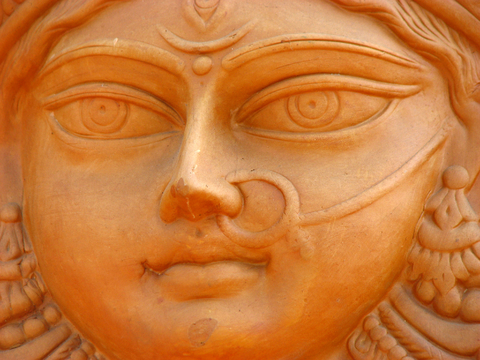
dreamstime_1568537We expect monotheists, who believe themselves to be worshipping the one and only true God, to have difficulty accomodating gods or even conflicting views about God. 

Although David Hume (1711-1776) has sometimes been derided as an armchair-anthropologist, he was one of the wisest observers of human behavior and of religion.  When discussing monotheism in his book, The Natural History of Religion, he lucidly noted that when “one sole object of devotion is acknowledged, the worship of other deities is regarded as absurd and impious…as no one can conceive, that the same being should be pleased with different and opposite rites and principles; the several sects fall naturally into animosity, and mutually discharge on each other that sacred zeal and rancour, the most furious and implacable of all human passions.”

And what about polytheists?  Are they less likely to perpetrate violence on those with other gods?  By virtue of its multiple gods, polytheism can, in principle, incorporate or absorb other gods without stripping them of their attributes.  In Hume’s opinion, “the intolerance of almost all religions, which have maintained the unity of God, is as remarkable as the contrary principle of polytheists.”  His view matches the romantic views of contemporary Westerners who often believe that non-monotheistic faiths are, par excellence, inclusive and hence, non-violent.  But are they?

History mostly supports Hume’s conclusion.  Take the Hindu state of Gujarat in India, for instance.  During its cosmopolitan trading history of some 5,000 years, it assimilated the religions of those who settled on its shores. 

But on September 27, 2002, 58 Hindu train passengers died after Muslims set their train on fire during a stop in Gujarat.  This intra-Indian violence was perpetrated by Muslim monotheists on Hindu polytheists.  Given that Islam acknowledges only one object of devotion, the world might not have been surprised (except for its cruelty) at such monotheistic-polytheistic enmity. 

Except that the supposedly tolerant polytheists were not to be outdone violence-wise.  As the province’s Hindu chief minister intoned (quoting Newton’s third law):  “Every action has an equal and opposite reaction.”  According to Robert Kaplan, Hindu mobs quickly organized.  The day after the train fire, they attacked the Muslim quarters in Ahmedabab (the city where Ghandi established his ashram) and in other cities.  Hindu men “raped Muslim women, before pouring kerosene down their throats and the throats of their children, then setting them all on fire.  Muslim men were forced to watch the ritualistic killings before they, too, were put to death.  More than 400 women were raped; 2,000 people, overwhelmingly Muslim, [were] murdered; and 200,000 more [were] made homeless throughout the state.”

And there’s more.  Martin Marty reported how, in 2008, Hindu militants forced Christians living in the eastern state of Orissa, to deny their faith, flee or die.    

We could, of course, argue that religion has oft-times been harnessed to serve various political and nationalistic agendas.  Then again, we could, just as easily, counter-argue the reverse—namely, that religion has oft-times harnessed political and nationalistic institutions to crush resistant, competing religions and assert its hegemony. 

Let’s ask, instead, whether polytheism can co-exist with monotheism.  By its very nature, monotheism recognizes only one God, and its God is jealous of all other gods.  Clearly a my-way-or-the-highway kind of God won’t share the road with other gods.  But what happens when a monotheistic God refuses to join a polytheism’s pantheon?  We need only recall how it came to pass that the Jews were exiled from the land of Palestine in the 1st century CE.  Their God refused to leave his bachelor pad in heaven for the gods’ group-living arrangement on Mt. Olympus.  

The so-called ‘New Atheists’ would no doubt propose that India eliminate all religions whether theistic or polytheistic.  Get rid of God and gods, and the Federation of no-God will surely be (finally and permanently) established on earth, bringing with it peace, justice and prosperity for all.  Okay.  Fine.  But what should India do as it waits for the New Atheists’ armchair-proselytizing to begin bearing fruit?  

A crassly utilitarian yearning for order may be key to peace in India.  The threat of déjà-vu anarchy, the memory of partition’s chaos and destruction, could entice cooler heads to prevail.  After all, without domestic tranquility, the blessings of prosperity remain out of reach for Hindus and Muslims alike.  Let’s hope the battle of the gods finally becomes a thing of the past. 

References:  David Hume, The Natural History of Religion, New York:  MacMillan Publishing Company, 1992), 39-41; Robert D. Kaplan, “India’s New Face,’ in The Atlantic, April 2009, vol. 303, no. 3, 74-81, Martin Marty, “Monotheism, Polytheism and Violence,” in Sightings, October 20, 2008, bi-weekly subscription e-newsletter available through the Martin Marty Center of the University of Chicago. 

#14 Rescued from the iron cage of guilt

15 Sunday Mar 2009

Posted by TheNakedTheologian in Ethics, God, Philosophy of Religion, Religion, Religious Philosophy, Theological Ethics, Theology

≈ 2 Comments

Tags

Christ, conscience, guilt, Lent, salvation, sin

dreamstime_22640121

If you don’t have an ear for the music of Christianity, it may be hard to make sense of why the Lenten days tracking the Gospels’ accounts of Jesus’ journey from freedom to arrest, crucifixion, and resurrection are so important to Christians.

The answer partly lies in the doctrine that Christ liberates, or saves, human beings from bondage to sin.  

But what’s this about freedom from bondage to sin? 

Here’s an existential way of thinking about sin or wrongdoing.  If we reflect on the past twenty-four hours, a clear-eyed inventory of what we did, said, didn’t do, didn’t say, either leaves us with a comfortable feeling or it leaves us troubled.  Our consciences are a built-in mechanism that detects some (not all) of the gaps between what we consider to be the good and right thing to say and do, and what we actually did say and do.  When the gaps are wide, we feel bad—our conscience bothers us.  We call that feeling guilt. 

To do guilt is part of the human condition.  True, some people proclaim they ‘don’t do guilt’ as if ‘doing’ guilt was a bad thing and nobody should ever ‘do’ it.  But should Chris really not feel guilty about smacking the beJesus out of Rhianna?  Those who claim they ‘don’t do guilt’ probably mean that they ‘don’t do self-loathing.’  Although we may have been taught otherwise, the anguish of a guilty conscience need not result in self-loathing.  In fact, the anguish of a guilty conscience can prompt us to make some positive changes. 

There’s a difference worth noticing between self-acceptance and self-approval.  Guilt helps us keep the difference straight.  We might accept ourselves as we are, but a guilty conscience reminds us we’re a ways off from the acts and intentions that are in keeping with out-and-out self-approval. 

Back to guilt and sin.  Shall we agree that nobody (except a masochist) likes doing guilt?  Guilt feels bad.  Downright awful.   The problem then is what to do with our guilt.  Live with it?  Make amends to the injured party?  Ignore it?  Suppress it and make it ‘disappear’?  Deny it?  Feel sorry for yourself?  Take it out on other people?  Ask the wronged party for forgiveness?  Ask yourself for forgiveness?  Ask God for forgiveness?

We, human beings, always carry hope and despair within us.  On the despair end, most of us have a low tolerance for the despair of the iron cage of guilt.  We are trapped, bound, imprisoned.  We want release from guilt, some way to feel better, some way to heal the hurt and be reconciled with ourselves. 

Many Christians hand their guilt over to God in prayer or in ritual with the hope that God will hand back forgiveness.  Many Christians believe that thanks to Jesus’ suffering and death on the cross, God forgives their wrongdoings.  The way this forgiveness works differs according to the Christian tradition.  Lutherans, for example, place their trust in Christ and, thanks to that trust, believe themselves forgiven by God (they know they’re still messing up as much as any of us, but they’re forgiven).  Roman Catholics confess their wrongdoings to priests who assign them works of contrition and forgive them in Christ’s name.  In all these Christian traditions, the key to forgiveness is Christ.  Thanks to the crucifixion, the doors of the iron cage of guilt spring open and the Christian is restored to wholeness.

Wholeness!  Stepping out of guilt’s iron cage!  Sounds great.  But if, for us, Jesus was not the Christ, then we must find other ways to seek forgiveness for wrongdoings and soothe our guilt.  Going directly to the party we have harmed and asking forgiveness is one way.  But what if they’re no longer alive, or we don’t know where they are?  

Helpful ideas, anyone?

#13 Giving up Me-Centrism for Lent

05 Thursday Mar 2009

Posted by TheNakedTheologian in Ethics, God, Philosophy, Philosophy of Religion, Religion, Religious Philosophy, Spiritual Exercises, Theological Ethics, Theology

≈ 2 Comments

Tags

Lent, Levinas, Me-Centrism

dreamstime_14845884Think you’re number one?  Who doesn’t?  Are you a narcissist? Hey, who isn’t? After all, our interior world is most vivid to ourselves.  Who could possibly know and care for our well-being and happiness better than ourselves?  A tidy amount of Me-Centrism is desirable (we Americans prefer to call it self-esteem), but in sloppy-sized doses, it turns into self-absorption.  Result:  lack of interest in, and lack of concern for others.  Not you, you say?  When was the last time you stepped out of the internal monologue a-buzzing in your head or the fatigue from a long day‘s work to look the checkout clerk at Dominick’s in the eye?  You know, like he was a real person worthy of your attention (which, of course, he is)?  And did you say, “Hello, how are you today?”  And were really interested in the answer?  Or did you look away before he finished telling you? 

A little thing, sure, this saying hello, how are you.  But imagine how different our every-day would be if we stepped out of our heads and shook off our tiredness just long enough to treat each other like each one of us mattered.  Imagine the ordinary wonderfulness of a simple “after you” as we stepped onto the bus or walked into the elevator.  Or letting a car (or two) merge ahead of us on a clogged freeway, or smiling at the stranger on the street for no good reason, or paying our frenenmy an unsolicited compliment, or turning off our cell phone to give a friend our full attention.  With all that free-flowing kindness, especially in these hard economic times, who knows what we could achieve?  Our quest for meaning could literally end.  We would all find peace of mind.  Messianism would have come to pass.

The great religious faith traditions ask their followers, at some point during the year, to step-out of their daily routines and orient themselves toward something greater.   To demonstrate that they mean it and are 100% committed to the exercise, these followers are asked to sacrifice something—in other words, to give up something they value, like a cow, or money, or food.  The act of having given up something serves as a prod of sorts, a powerful reminder (lest one slack off) to reflect on one’s relationship with the divine.   This giving-up takes place in community so that one gets swept up in a great shift of life-as-usual.  The new normal is a common life focused on God.   Whether one is taking part in the one-day fast of Yom Kippur or the month-long fast of Ramadan or the surrendering of something of one’s choosing for the forty days of Lent, the giving-up has a definite time-table with well-advertised and ritually-marked start and end dates. 

But what about those who aren’t followers of such traditions but want to engage in a similar kind of spiritual exercise (exercise in the sense of an intentional and disciplined activity)?  Yow!  That’s harder.  After all, you’ll give up something without any kind of communal or ritual help.  That’s like deciding to give up cigarettes without a support group and without nicotine patches.  Still, for those who are up to the challenge, it could be even more rewarding.  

So let’s dare to give up something for Lent.  How about Me-Centrism?  Give up Me-Centrism until April 12 and orient yourself toward God.  The phenomenologist and ethicist, Emmanuel Levinas, taught that we might, in the act of treating others as human beings instead of objects, discover a passageway to the extraordinary, the infinite, the transcendent.  No promises though.  Hopefully, even if you don’t find that passageway, the gift of a simple human interaction is gift enough.  And should the checkout clerk or the passenger on the bus respond to your friendly gaze by looking at you like you’re crazy, or looking past you like you don’t exist—well, you’ll know you did your part.  And no one can ask more than that.

Reference:  Emmanuel Levinas, Nine Talmudic Readings, intro. and trans. Annette Aronowicz (Bloomington:  Indiana University Press, 1990).


#12 God without clothes: what would s/he look like?

26 Thursday Feb 2009

Posted by TheNakedTheologian in God, Philosophy of Religions, Prayer, Religion, Religious Philosophy, Theology

≈ 4 Comments

dreamstime_3677269

Is God unknowable, beyond the possibility of the human mind to comprehend? There are plenty of good reasons to be intentional about keeping God abstract.  To preserve the one God as a word of appeal for every person, regardless of whether that person is male or female, is most easily achieved by denying that God has either male or female characteristics.  Even so, if we’re honest, we usually find ways to give that concept some human-like characteristics.  We, human beings, prefer gods that look, talk, feel, and think like us.  Because if God doesn’t have something in common with us, exactly how are we supposed to relate to God?

In technical-speak, we anthropomorphize God—we give God human characteristics.  When we want a personal relationship with a personal God, our god will have something in common with us.  Christianity’s god-man, Jesus, offers the possibility of such a connection.  So does polytheism’s many gods.  If we’re female, we might find it more comfortable to talk to, or pray to, a god we visualize as female.  Or if we’re feminists (male or female), we might consider females to be superior to males and God will be female.  Or maybe we simply prefer a god who is mother-like, with all of the stereotypical attributes of the perfectly matronly-matron:  you know, warm, unconditionally loving, benevolent, concerned, tender, soft, gentle, etc.  Imagine a female god who’s like the mother we have (or wish we had) but even better—mother-gods never, ever get crabby! 

So powerful is the urge to imagine God as female that Jewish rabbis, in spite of Judaism’s resistance to anthropomorphizing God, sometimes used the name Shekhinah for God in the Talmud.  Shekhinah is a feminine form of the Hebrew root-word meaning “to dwell” and so, the name Shekhinah denotes “God’s indwelling presence.”  After the exile of Jews from the Holy Land and the destruction of Jerusalem’s Temple in 70 CE, the rabbis taught that the Shekhinah shared the people’s suffering and grieved with them.   As for Christians, during the Middle Ages, they turned to the Virgin Mary in ever greater numbers, looking for comfort and solace during a time when Church doctrine made Christ less of a concerned intercessor and more of a retributive judge.  Mary continues to play an important role; for some Catholics she’s almost a fourth person in the godhead.

But the burning question remains—if we insist that God is radically unitary, do we resist the urge to anthropomorphize God or do we decide we’re okay with God having male or female attributes? 

If we really must anthropomorphize, then we can have our cake and eat it too by following the lead of the Talmudic rabbis.  They recommend qualifying our metaphors for God with the phrase:  “if it were really possible [to say such a thing]”.  We would then talk about how God is like a mother “if it were really possible to say such a thing.”  Granted, this phrase gets clunky, especially when praying.  Or we could follow the approach of the 6th century Christian theologian known as Pseudo-Dionysius, and adopt the habit of negating any positive, or concrete, thing we say about God.  How does that work exactly?  Like this:  “God is a mother and isn’t a mother. Such a linguistic device indicates how God is not only beyond motherhood but God is also beyond non-motherhood; God transcends all predicates.

Whether God is male or female or neither (if it is really possible to say that God is either male or female), may God bless you (if it is really possible to say that God blesses).  

Reference:  Louis Jacob, “God:  God in Postbiblical Judaism,” in Encyclopedia of Religion, 2nd ed., 3547-3552 (New York: Macmillan Reference USA, 2004), 3548. 

#11 What’s in a name? God, G-d, G*d

19 Thursday Feb 2009

Posted by TheNakedTheologian in God, Philosophy of Religions, Prayer, Religion, Theology

≈ 12 Comments

dreamstime_64650281A quick glance at a few different faith traditions shows just how many ways there are to speak about the divine.  For example, some traditional Jews won’t say the word God because they believe that it is too holy to pronounce. One is forbidden from making any representations of God—even in speech.  When reading the Bible out loud, one is to replace the Hebrew word for G-d with the word Adonai, meaning Lord.

Sister Nancy Corcoran, a Catholic nun, argues against using the word, Lord, although it is a common word in Christian prayer as well as Jewish prayer.  For her, the term Lord does make a representation—of a male God (notice, though, how the adjective “male” had to appear in front of the word, God, to indicate God had a gender).  Sister Corcoran is an advocate of the name for God developed by Elisabeth Schussler Fiorenza, a Professor of Divinity at Harvard University Divinity School.  Taking a similar approach to that of Orthodox Jews, “Schussler Fiorenza prefers the spelling G*d because it suggests that, as humans, our ideas of and names for God are ambiguous and inadequate.  It also allows for a God without male or female characteristics.” 

How does Fiorenza pronounce the word G*d?  This word looks as un-pronounce-able as the symbol used as a name for three years by the musician Prince.  Unclear also are the reasons why, for Fiorenza, the word God necessarily suggests male or female characteristics.  Certainly, many theologians and philosophers throughout the ages have not associated male or female characteristics with this word (like Fiorenza, they’ve also argued that our ideas of God are ambiguous and inadequate but, unlike her, they did not argue we should abandon the word).  Okay, sure, the Bible refers to God as Him, but today, pronouns are often eliminated by sensitive theologians and philosophers (even if this sometimes results in awkward sentences).  Take, for example, the sentence:  “God wants you to love others as much as you love yourself or God’s Self.” 

Just like we use the single word, actor, to refer to either a female (formerly known as an actress) or a male actor, the single word, god, can refer to a female god, a male god, a god without gender, a god with both genders, etc. (in the last two cases, the analogy with the word, actor, fails!).  Unlike the word, Goddess, which does imply gender, the word, God, does not.  Thanks to its plasticity, it is the superior choice.  So why mess with it?

HNFFT (Her Nakedness’ Food for Thought):  What do you call God?  Does it imply has a gender?  Can it serve as the word of appeal for anyone, male or female?

References:  Nancy Corcoran.  A Multifaith Guide to Creating Personal Prayer in Your Life (Woodstock, VT:  Skylight Paths, 2007), 119.

#10 God, will You be my Valentine?

10 Tuesday Feb 2009

Posted by TheNakedTheologian in God, Religion, Theology

≈ 1 Comment

dreamstime_72297991

On this Valentine’s Day, or any other day, do you find yourself alone, fingers pressed against your lower lip, whispering breathlessly, “Would only that He would kiss me with the kisses of His mouth!  Would that His left hand were under my head, and His right hand embrace me!  Surely, His love is better than wine.”  Are you longing for God?  Pining for God-the-lover?  Yearning for the divine lover?  

Love-longing, love-pining, love-yearning for God is as old as the Bible itself.

How laced the words of mystics have been with the raw language of desire for God, the beloved lover:  “Please God.  Please let me see Your face, let me hear Your voice; for Your voice is sweet, and Your face is lovely.”  No, nothing new here.  So far, most of this post’s longing, pining, yearning phrases have been lifted right from the Hebrew Bible’s Song of Solomon, also called the Song of Songs.  For many Jews, this sensual love song is an allegory for God’s love for Israel, but Christian mystics like Bernard of Clairvaux have interpreted it as a sizzling tale of betrothal (made and lost) between a person and God.  The twentieth-century Jewish philosopher, Franz Rosenzweig, drew heavily upon the Song of Songs as he sought to understand his personal relationship with God. 

Indeed, for some, love for God is imbued with passionate ardor. Take Mechthild of Magdeburg, a medieval mystic. Her spiritual life unfolds in several stages and the last stage is–yes, a night of love. Burning with desire for God, trembling with longing, Mechthild ascends towards God, moving ever closer in a “flight of love”, until she, at long last, reaches the One she seeks and unites with Him in a supreme moment of ecstasy.  Face to face with this wonder, she “forgets the earth”; she embraces Him, becoming one with Him “as water mingles with wine”;  she wants nothing any more except to remain in God’s embrace until her last breath, joined to Him without end, without measure, without pause. 

Although, for many mystics, it is the human who is restless with love for God, Mechthild “introduced the anguish of desire in God.”  God is sick with love for her.  God burns with desire and looks upon her soul as “a stream in which to cool His ardor.”

As if the prose hasn’t yet been hot, hot, hot enough, Mechthild’s love-sick soul pleads with God to “Cover me with the cloak of your long desire,” “for where two burning desires encounter, there love is perfect.”

Sadly, Mechthild’s rapturous ardor fades away.  For her, the way of love with God “is transitory in this life.”  She observes, from bitter experience, that “This cannot last long.”  

And since there’s nothing new under the sun, there’s a passage in the Song of Songs where the fiancee, abandoned by her lover, seeks, in tears, the one she still loves.

Questions:  Do you love God?  Do you love God erotically?  If you texted God a love note, what would you say?

For those of you who would make God your Valentine, may your pursuit be short and your romance long-lived.

As a Valentine’s Day gift, this post closes with Peter Gabriel‘s lyrics to the song “In Your Eyes,” lyrics about his love for God.

“In Your Eyes”

love I get so lost, sometimes
days pass and this emptiness fills my heart
when I want to run away
I drive off in my car
but whichever way I go
I come back to the place you are

all my instincts, they return
and the grand facade, so soon will burn
without a noise, without my pride
I reach out from the inside

in your eyes
the light the heat
in your eyes
I am complete
in your eyes
I see the doorway to a thousand churches
in your eyes
the resolution of all the fruitless searches
in your eyes
I see the light and the heat
in your eyes
oh, I want to be that complete
I want to touch the light
the heat I see in your eyes

love, I don’t like to see so much pain
so much wasted and this moment keeps slipping away
I get so tired of working so hard for our survival
I look to the time with you to keep me awake and alive

and all my instincts, they return
and the grand facade, so soon will burn
without a noise, without my pride
I reach out from the inside

in your eyes
the light the heat
in your eyes
I am complete
in your eyes
I see the doorway to a thousand churches
in your eyes
the resolution of all the fruitless searches
in your eyes
I see the light and the heat
in your eyes
oh, I want to be that complete
I want to touch the light,
the heat I see in your eyes
in your eyes in your eyes

References:  Emilie Zum Brunn and Georgette Epiney-Burgard, Women Mystics in Medieval Europe, trans. Sheila Hughes (St. Paul, MN:  Paragon House, 1989), 48-9.

#9 Build-a-prayer workshop

05 Thursday Feb 2009

Posted by TheNakedTheologian in God, Prayer, Religion, Theology

≈ Leave a comment

dreamstime_7260924Your views on God (your theology) affect what you say when you pray.  Not sure what to call God when you pray?  Not sure how to start your prayers?  Not even sure how to pray? 

Here are three steps to help you come up with your own prayers and discover your theology at the same time.  Yup.  You get two for the price of one.

1.            In the list below, circle all the words for God that most appeal to you.  This list mostly duplicates one developed by Sister Nancy Corcoran (a Catholic nun).

The All-Compassionate, the All-Merciful, the Absolute Ruler, the Pure One, the Source of Peace, the Inspirer of Faith, the Guardian, the Victorious, the Compeller, the Creator, the Maker of Order, the Shaper of Beauty, the Forgiving, the Subduer, the Giver of All, the Sustainer, the Opener, the Knower of All, the Constrictor, the Reliever, the Abaser, the Exalter, the Bestower of Honors, the Humiliator, the Hearer of All, the Seer of All, the Judge, the Just, the Subtle One, the All-Aware, the Forbearing, the Magnificent, the Forgiver and Hider of Faults, the Rewarder of Thankfulness, the Highest, the Greatest, the Preserver, the Nourisher, the Accounter, the Mighty, the Generous, the Watchful One, the Responder to Prayer, the All-Comprehending, the Perfectly Wise, the Loving One, the Majestic One, Breath of Life, the Resurrection, the Witness, the Truth, the Trustee, the Possessor of All Strength, the Good, the Appraiser, the Originator, the Restorer, the Giver of Life, the Taker of Life, the Ever Living One, the Self-Existing One, the Finder, the Glorious, the Only One, the One, the Satisfier of All Needs, The Gracious One, the All Powerful, the Creator of All Power, the Expediter, the Delayer, the First, the Last, the Manifest One, the Hidden One, the Protecting Friend, the Supreme One, the Doer of Good, the Guide to Repentance, the Avenger, the Forgiver, the Clement, the Owner of All, the Lord of Majesty and Bounty, the Equitable One, the Gatherer, the Rich One, the Enricher, the Preventer of Harm, the Creator of the Harmful, the Creator of Good, the Light, the Guide, the Originator, the Everlasting One, the One Who Is Present and Has Always Been and Always Will Be Present, the Inheritor of All, the Righteous Teacher, the Lawgiver, the Patient One.

2.            Add other words for God that appeal to you but don’t appear in the list.

3.            Rewrite the following three prayers by substituting the words for God with the ones you prefer (and also by changing phrases as you see fit).  Or choose other prayers, even ones whose theology strike you as vastly different from your own.  The effort of rewriting different kinds of prayers will help you discover your theology because it’ll help you figure out what ways of talking to God work for you and which don’t.

Prayer A:            O God whom humans have called the unknowable, whom they have sought in unfamiliar ways of thought and have come back empty-handed, let us see how much You are the God of common things and of every day experience, the God who is near and not far off.  For surely, You are not only the end of the quest but the beginning, not the reward of life’s pilgrimage alone but its companion hope.  Help us, if we cannot see You in the splendor of the sphere to see You in the miracle of every flower that grows, and when we need the strength and solace of Your love, let us seek it in one another.  (prayer written by the Unitarian minister, Rev. A. Powell Davies) 

Prayer B:            O God, You have called us into life, and set us in the midst of purposes we cannot measure or understand.  Yet we thank You for the good we know, for the life we have, and for the gifts that are our daily portion: 

For health and healing, for labor and repose, for the ever-renewed beauty of earth and sky, for thoughts of truth and justice which stir us from our ease and move us to acts of goodness, and for the contemplation of Your eternal presence, which fills us with hope that what is good and lovely cannot perish.  (Jewish Reform prayer)

Prayer C:            God of our weary years, God of our silent tears, Thou who has brought us thus far on the way; Thou who has by Thy might led us into the light, keep us forever in the path, we pray.  Lest our feet stray from the places, our God, where we met Thee, lest our hearts drunk with the wine of the world, we forget Thee, shadowed beneath Thy hand, may we forever stand, true to our God, true to our native land.  (often called the African-American anthem, prayed by the Reverend James Lowery at President Obama’s Inauguration) 

For more naked chat about prayer, visit this post,  #8 Prayer:  getting intimate with God.

References:  1) Nancy Corcoran.  A Multifaith Guide to Creating Personal Prayer in Your Life (Woodstock, VT: Skylight Paths, 2007), 119;  2) Prayer A:  A. Powell Davies, The Language of the Heart: A Book of Prayers by A. Powell Davies (Washington, DC:  All Souls Unitarian Church, 1956), 114;  3) Prayer B:  The Gates of Prayer, The New Union Prayerbook (New York:  Central Conference of Rabbis, 1975), 670; 4) Prayer C:  James Weldon Johnson, “Lift Every Voice and Sing,” Hymn #149 in Singing the Living Tradition (Boston, Beacon Press, 1993).

#8 Prayer: getting intimate with God

31 Saturday Jan 2009

Posted by TheNakedTheologian in God, Prayer, Religion, Spirituality, Theology

≈ 1 Comment

dreamstime_6064669For most people of faith, religion is more than a philosophical discussion.  And for most,  “God is the God of religion only when He is our God and we can speak to Him.”  Rabbi Leo Baeck wrote those words.  He ministered to Jews imprisoned in Theresienstadt before they were shipped to Nazi death camps. He also wrote that “The deeper God’s love [is] felt, the more human [is] its form of expression…One cannot pray in concepts; one cannot hope in definitions and in the abstract.”

When we reach out, in prayer, to the God Whom Baeck calls the God of religion—the God Who is our God—our prayers reflect our intimate relationship with God.  We pray to God Who is always here and everywhere, the God Who is with us in all places and at all times, the God Who is as close to us as our own breath.  When we pray, we talk to God without any need to catch God up on what’s happened in our lives (unlike a friend we’re meeting for coffee).  We talk to God without preamble, sure that God has traveled with us every minute of the day, aware of our thoughts, our worries, our triumphs.  We lift our voices to God Who’s been with us at every step, and Who is still here, right now.  We lift our voices to God, the most intimate of intimates. 

The Christian Reformer, Martin Luther found it significant that Jesus called God, not Father, but Abba, the Aramaic word for Daddy (see Mark 14:36).  For Luther, the Lord’s Prayer might rightly be prayed like this:  “Our Daddy, Who art in Heaven… “

At one time, English-speakers had pronouns that captured the intimacy we bring to prayer—Thou, Thee, Thine.  These pronouns disappeared in the 17th century, folded, for good or for ill, into the formal pronouns, You, You, Yours.  However, European languages like French, Spanish, and German retain the informal, intimate pronouns English-speakers have lost.  Prayers in those languages show the tender and personal way in which people of faith often speak to God.  The informality of these pronouns underscore how we presume a personal God whenever we turn to God with trust and openness.   

This prayer (lightly edited) appeared on a poster in the Cathedral of St. Denis.  It was written by Brother Roger; until Brother Roger was murdered in 2007, he led a Christian ecumenical community in Taize, France, that is dedicated to peaceful reconciliation.  Rabbi Baeck and Brother Roger had very different Gods but they could have prayed this prayer together.  The Naked Theologian’s English translation appears below the original.  Note the words “toi”, “tu” and “te” in the French version—these are pronouns used when speaking to close friends, loved ones, and children.

Toi, [Dieu], tu vois qui je suis,                       
            j’ai besoin de ne rien te cacher                       
de mon cœur, tu m’accueilles avec                                   
            mes peines et mes inquiétudes                       
                        tu comprends tout de moi.           

Thou, [God], Thou seest whom I am,
             I need not hide anything from Thee
of my heart, Thou welcomest me with
            my sorrows and my worries
                        Thou understandeth all about me.

Baeck taught that we have faith in God before we have thoughts about God.  What do you say when you pray?  The way you talk to God may be different from the way you think about God.  Listen in on yourself—see what you think.  

Shall we close with the Hebrew word for “so be it”?  Let’s.  Amen.

References:  Albert H. Friedlander, Leo Baeck:  Teacher of Theresienstadt (Woodstock, NY:  The Overlook Press, 1991), 80-1.

#7 We fear not God, Who busts us not

26 Monday Jan 2009

Posted by TheNakedTheologian in God, Philosophy, Religion, Theological Ethics, Theology

≈ 4 Comments

dreamstime_27392712


Oaths.  This blog’s previous entry, “#6 So help me God“, described how, for a truly-honest person, oaths “give rise to no new duties.”  For such persons, oaths “merely serve to awaken” the conscience.  In some other world, truly-honest persons may exist. But let’s face it, that world is not our world.  No perfectly, completely, 100%, all of the time, 24/7, honest person has ever travelled this world’s byways (some would argue that Jesus, the Buddha, and President Obama are exceptions).  No matter how hard we work at it (if we even work at it that hard), we swear to do such-and-such, we promise to do something-or-other, and then—shall we admit it?—we renege. 

And so, given that we don’t qualify for 100%-truly-honest-person status, oaths are for us after all.  Oaths are intended for what Moses Mendelssohn called the “ordinary, middling sort” of person, or for everyone, since we must all “be numbered among this class.”  Okay, we may take exception to being called ordinary, middling sorts of persons, but in our most clear-eyed moments, we know that, more often than we like to admit, we are “weak, irresolute, and vacillating.”  Sure, we have principles, and sure, we have the best of intentions to keep our word but we sometimes  (often?) lack the will to follow through, especially when the going gets tough.  

When Mendelssohn says we need oaths to God because we all qualify as ordinary, middling sorts of persons, he is making a claim about what we, human beings, are like.  In technical language, he’s making an anthropological claim.  His (philosophical) anthropology shaped his theology; it shaped the way he understood God and the God-human relationship.  

For Mendelssohn, God is a witness not only of our “every word and assertion,” but of all our thoughts and most secret sentiments.  And since God is privy to our every word, assertion, thought and secret sentiment, God is privy to our every “transgression of his most holy will.”  Armed with this knowledge, God allows no transgression to go unpunished.  

Such a view of God remains a common one.  After all, we want the world to be fair; we want good guys to finish first and bad guys to get their just deserts.  But since we’re familiar with plenty of bad guys who never get their just deserts, we assume or conjecture that God administers justice in the afterlife.

Universalists (by affiliation or sympathy) take a different approach to the fairness/justice conumdrum.  They believe that God is simply too good to punish anyone. But like most of us, the Universalists want the world to be fair.  And so they also believe that although God doesn’t punish us after we die, our consciences torment us whenever we do something like break a promise.  Thanks to our consciences, we’re punished during our lifetimes.  The Universalists have what’s called a high anthropology. They assume that human beings have fully-active, sensitive consciences.  They assume that we feel remorseful about the wrongs we commit.  

Most religionists reject the Universalist approach.  They might even suspect Universalists of being immoral people. That’s because they wonder why anyone who doesn’t believe in God’s punishment would ever be motivated enough to make the kinds of sacrifices required to do the ‘right’ thing.

When Mendelssohn explains that we need the assistance of an oath to God, it’s because he thinks we need a moral boost to keep our word.  He’s got a lower anthropology than the Universalists.  He thinks we need to transform a moment when our will is being tested into a decisive moment.  He thinks we need to transform a moment when we’d rather procrastinate into a moment when we resist every excuse under the sun (and there are no new excuses).  He thinks we need the assistance of a pledge to God, a “so help me God,” to shore up our resolve, to “gather up all the force and emphasis, with which the recollection of God, the all-righteous” can move us to do what we must.

So what is your anthropology?

Does fear of being busted by God motivate you to make good (more often) on your promises?  Or is giving your word to God (without fear of punishment) enough?  Hmm.  Really?  

What does your God demand of you?  Of human beings in general?  How does your anthropology influence your views about our ability to honor those demands? 

References:  Moses Mendelssohn, Jerusalem or on Religious Power and Judaism, trans. Allan Arkush (Hanover, NH: Brandeis University Press, 1983), 64-5.

#6 So help me God

18 Sunday Jan 2009

Posted by TheNakedTheologian in God, Religion, Theological Ethics, Theology

≈ 5 Comments

dreamstime_20324504

An apocryphal story has George Washington saying “So help me God” at the swearing-in ceremony of his Presidential Inauguration.  While scholars debate the plausibility of this claim, what is known for sure is that many Americans today expect incoming Presidents to end their oath of office with those theological words.  Yes, those words are theological–I’ll return to why in a bit.  

The Presidential oath of office mandated by the Constitution merely requires the incoming President to swear to “preserve, protect and defend the Constitution of the United States”–no more, no less.  Hence, the Constitution leaves it up to each new President to decide how he wishes to end the oath–whether right after the words, “United States”, or after adding “so help me God,” or, in some future time, with “so help me Shiva,” or with “Allahu Akbar.”  Now do you agree that the words “so help me God” are theological?

For some, they violate the separation of Church and State.  Indeed, a lawsuit has been filed by the atheist Michael Newdow (a level-7 atheist on the Dawkins scale?) challenging the right of almost-President Barack Obama to use them at his Inauguration.  Since Obama wants to say them, the issue seems (to this naked theologian anyway) to be one of freedom of speech and religion rather than one of separation of Church and State.  

Could “so help me God” somehow ’strengthen’ the new President’s resolve to keep his oath?  The German-Jewish philosopher, Moses Mendelssohn, made the following observation in a book he penned the year the American Revolution was about to stir in France (1783). Oaths invoking God, he wrote, “give rise to no new duties.”  In other words, oaths invoking God do not change the fact that the person, by dint of swearing to do something, has promised to make good on an obligation.  Oaths, Mendelssohn argued, “merely serve to awaken” the conscience. He also wisely observed that a truly honest person has not need of additional mechanisms to draw his or her attention to what he or she has already promised.  Hence, Mendelssohn concluded, oaths “are not, properly speaking, designed” for the person of conscience. (Nor are they designed for the n’er-do-well who has no respect for pledges–even his own).  Makes sense, don’t you think?  

If invoking God doesn’t serve as a moral booster, then “so help me God” takes on the quality of prayer.  Any new President who, at his discretion, chooses to close his oath with those words is, in effect, turning to God to ask for assistance.  He realistically anticipates that his resolve to keep his oath will be tested by the difficult compromises a head of state must consider.  He is asking God for help, not for moral reasons, but because he wants divine guidance and comfort when the going gets tough.  There’s no doubt, though, that he is, at the same time, telegraphing his theological convictions to the nation. In defense of almost-President Obama, he is limiting himself to the word God which signals an attempt to be inclusive of as many Americans as possible. Since Obama is a Christian, he might very well have preferred to finish with “so help me God, in Jesus’ name I pray.” Yes he could.  If he chose.  So help me God.  

Perhaps, one day, a President will surprise the nation by bucking the customary “so help me God.”  Perhaps, after repeating the Constitutional swearing-in oath, she will merely whisper to herself whatever words she wishes to add.  Perhaps she will even whisper so softly that recording devices and microphones will fail to register what she said. If so, she will have remained in the religiously neutral world of reason and common humanity, an all-inclusive world.  For now–well, if the President prays for God’s help, may God help the President.  

References:  1) Moses Mendelssohn, Jerusalem or on Religious Power and Judaism, trans. Allan Arkush (Hanover, NH: Brandeis University Press, 1983), 64;  2) Lisa Miller, “God and the Oath of Office,” Newsweek, Jan. 19, 2009, 13.

← Older posts
Newer posts →

The Naked Theologian

Unknown's avatar

Enter your email address to follow this blog and receive notifications of new posts by email.

Top Posts

  • #50 Is OCD the source of religion?

Recent Posts

  • #74 After the “Death of God,” new gods?
  • #73 Will Her Methodist Faith Help HRC Make a Comeback?
  • #72 Trump’s White Evangelical Voters: What Were They Thinking?

Recent Comments

Tulayhah's avatarTulayhah on #69 How To Read the Qur…
clinton's avatarclinton on #18 God and the Devil duke it…
marysedl's avatarmarysedl on #72 Trump’s White Evange…
DaCoot's avatarDaCoot on #11 What’s in a name? Go…
Home And Spirit's avatarHome And Spirit on #68 Suffering on Trial

Categories

Ethics God Philosophy of Religion Prayer Religion Religious Philosophy Spiritual Exercises Spirituality Theological Ethics Theology

Posts by Category

  • Ethics (15)
  • God (55)
  • Interpretation (1)
  • Philosophy (5)
  • Philosophy of Religion (27)
  • Philosophy of Religions (8)
  • Politics (1)
  • Prayer (11)
  • Religion (57)
  • Religious Philosophy (26)
  • Spiritual Exercises (9)
  • Spirituality (15)
  • Theological Ethics (26)
  • Theology (55)

Archives

Follow me on Twitter

My Tweets

Blog at WordPress.com.

Privacy & Cookies: This site uses cookies. By continuing to use this website, you agree to their use.
To find out more, including how to control cookies, see here: Cookie Policy
  • Subscribe Subscribed
    • The Naked Theologian
    • Join 67 other subscribers
    • Already have a WordPress.com account? Log in now.
    • The Naked Theologian
    • Subscribe Subscribed
    • Sign up
    • Log in
    • Report this content
    • View site in Reader
    • Manage subscriptions
    • Collapse this bar
 

Loading Comments...