
Tags
Constructive Theology, faith, God, Philosophical Theology, religious naturalism, Theology, Theology of Imminence, Unitarian Universalism
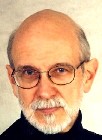
In this post and the next, I describe the religious naturalist theologies of two contemporary Unitarian Universalists. Their work emerged from the preoccupations of several theologians working during the mid to late 20th Century. This group of theologians, mainly working in the 1970s through the 1990s, fully embraced science but were troubled by the fact that evidence-based empirical knowledge of the universe left little to the imagination. They asked this question: if religious people embrace a materialistic reality, how were they to preserve some idea of the divine, the transcendent, or the sacred?
These theologians wanted to retain a sense of the sacred while remaining faithful to the non-sacred picture of the universe drawn by science. This small group included an unusually high number of Unitarian Universalists. Unusual, in part, because at the time there were not many Unitarian Universalist theologians. (There are fewer still today.)
I am grateful for the opportunity to tell you about the theology of Jerome Stone, a long-time personal friend and a mentor. In the next post, I will describe the religious naturalism of Karl Peters, of whom I’ve been aware for a long time but have never met in person. I chose Stone and Peters because they propose theologies grounded in the everyday. Their theologies are attuned to the grace and joy that can be discovered in the ordinary if we simply pay attention. Their theologies also integrate an ethic, offering us helpful ways to think about how to be good people and lead responsible lives.
Jerome Stone was born in 1934 and grew up in Connecticut and Rhode Island. His father was a Congregationalist minister who thought of the Bible as a symbolic poetic text and, as such, that it did not conflict with science. Stone has fond memories of riding in the car with his father on their way to church and of their chats about such rather esoteric topics like the differences between atheism, deism, and theism. He also has fond memories of the church youth programs that he attended as a teen-ager and how the youth would focus on doing good and on their responsibilities toward the world.
He enrolled at the University of Chicago at the tender age of 16. It was there that he had a decisive realization. He’d been taught at church that dedicating oneself to being and to doing good was a noble endeavor, but he began to see that accepting gifts of help and comfort from others and from the world was also important.
Stone followed in his father’s footsteps and became a Congregationalist minister himself. But, as if serving a congregation and supporting a wife and two children wasn’t enough, he decided to enroll in a doctoral program in theology at the University of Chicago.
It was there, as he began working on his dissertation, that he realized he had lost his faith in a personal God. He also realized that he now viewed reality in purely naturalistic terms, which, for him, meant there was nothing beyond this world.
Given these views, how was he to push ahead with a PhD in theology? Stone’s advisor was adamant that all the world’s religions point to something transcendent, something beyond the self. But he also told Stone that when pointing to something transcendent, the religions are not always pointing vertically toward something above. He suggested Stone focus his research on theologians whose works point in a horizontal direction, toward something transcendent in this world. Stone found this approach congenial, and he was able to proceed with writing his dissertation. After he graduated in 1973, he became a professor of philosophy at William Rainey Harper College in Palatine.
Eventually, Stone developed his own version of a transcendent “this-world” theology, sharing it with the world in his best-known book, The Minimalist Vision of Transcendence: A Naturalist Philosophy of Religion, published in 1992.
Stone’s minimalist vision of transcendence goes something like this. Stone eliminated the idea of “God” from his theology because he had come to prefer the idea of the “transcendent” to the idea of “God.” However, he wanted to remain attentive to the sacredness of life’s many blessings, which so often come from transcendent resources—which in his case, mean resources outside of ourselves.
To explain what he means by transcendent resource or blessing, Stone tells this story: He had just learned that his father had died and was sitting slumped on the living room sofa when his daughter, who was eight at the time, came home from school. She could see something was wrong and when he told her what had happened, she cried out—“Oh Dad!”—and threw her arms around him. He describes this as one of the most comforting and supportive moments of his life. For him, her hug was an unexpected and freely given gift of comfort and love. This gift of comfort and love was not the work of a personal God but it wasn’t just a “mere” event either. For Stone, his daughter’s hug was sacred, a term that since his early days as a Congregationalist had always carried a notion of respect. Her hug was sacred. For him, the deep comfort and support he felt so powerfully at that moment came from outside the situation. For him, it was a moment of transcendent grace.
Stone resists saying more than this about the origin of such gifts of transcendent grace. In his view, these kinds of explanations are an overreach and can’t be defended. Nonetheless, just because we refuse to speculate about the origin of these gifts doesn’t mean shouldn’t cut ourselves off from them. They are important resources of grace, offering us renewal, meaning, and healing. They are so important that he worries that the secularization of the West has undermined our ability to appreciate the sacredness of many of life’s blessings. He hopes that secular humanists will not forget to be attentive to life’s transcendent, sacred goodness.
Stone’s theology is two-pronged one might say. He is convinced that life’s sacred blessings should be balanced by life’s sacred judgment. While he holds tightly to the importance of grace, he also holds tightly to the value of judgment because, for him, judgment offers the possibility of critique and challenge. Just as Stone calls for the recovery of transcendent resources of grace, he calls for the recovery of transcendent resources of judgment.
Here again, Stone likes to illustrate what he means by transcendent resources of judgment with a story from his own life. He tells of how, after Martin Luther King Jr. was murdered, some residents of the city of Evanston would take part in weekly marches to pressure the city to pass an open housing ordinance. At that time it was legal to refuse to rent or sell a house, including to Blacks and Jews. He hesitated to participate because he felt overwhelmed by his other responsibilities at the time—he was after all a graduate student teaching full time and raising a family. But he also felt a sacred judgment coming from outside of his daily routine reminding him of the values that mattered most to him. This sense of a sacred demand to act against Evanston’s discriminatory housing practices, motivated him to juggle his schedule so he too could join the marches.
Just as Stone worries that Western secularization, or what he calls self-assured secularity has led a loss of resources of transcendent goodness, he worries that it has led to a loss of resources of transcendent judgment. This, he fears, has led to a loss of any perspective from which to call into question our society as well as ourselves.
In the same way that Stone calls for the recovery of transcendent resources of grace, he calls for the recovery of transcendent resources of judgment. He is convinced that, together, grace and judgment work together to deepen the human spirit.
Stone categorizes his theology as a kind of religious naturalism rather than as a kind of religious humanism. That’s because, for him, the aspects of human experience that are sacred or divine come from outside the human. He conceives of the resources of grace and judgment as transcending the human, as resources beyond the human even if they remain in the horizontal plane of nature.
Stone’s minimalist vision of transcendence theology aligns well with the theological affinities of many Unitarian Universalists. Perhaps not surprisingly, after he retired from teaching in 2001, Stone officially became a Unitarian Universalist. He used his credentials as a Congregationalist minister as stepping stones to become credentialed as a UU minister. He taught as an adjunct professor at Meadville Lombard Theological School, which was then a Unitarian Universalist seminary. And, for nearly a decade, he served as the community minister of the Unitarian Church in Evanston.

