
• About

The Naked Theologian

~ A blog for stripped-down theology

The Naked Theologian

Monthly Archives: October 2009

#38 Multifaith squabble–over love!

31 Saturday Oct 2009

Posted by TheNakedTheologian in God, Philosophy of Religion, Philosophy of Religions, Religion, Theological Ethics, Theology

≈ Leave a comment

Tags

Multifaith dialogue, Papal encyclical, Pope Benedict XVI, Thomas Aquinas, Thomism

iStock_000000779206XSmall

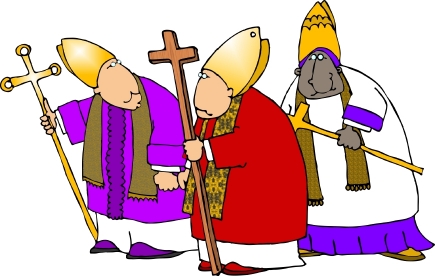
If you imagine that multifaith dialogue is easy, this post will change your mind. Continue reading but be warned that you’ll be asked to tease out the intricacies of an argument between the University of Chicago historian, David Nirenberg, a champion of secularism, and His Holiness, Pope Benedict XVI, the champion par excellence of Roman Catholicism.

Ideally, when we enter into a dialogue about religious beliefs, we do so with a genuine desire for authentic conversation.  We attempt to understand, as much as possible, our interlocutor’s point of view especially when we find his or her point of view offensive.  But, in the present case, even a brilliant scholar like Nirenberg, who’s written insightful books about the three Abrahamic religions, loses his patience and calls on His Holiness to stop speaking like a Roman Catholic.

Nirenberg aired his differences with the Pope in a September 23, 2009, article in The New Republic, “Love and Capitalism,” in which he reviewed Benedict’s book-length encyclical, “Caritas in Veritate:  On Integral Human Development in Charity and Truth.”

The problem, for Nirenberg, is not the Pope’s claim to the Truth:  “Popes,” Nirenberg writes, “have the right, indeed the obligation, to teach believers the truth as they are given to perceive it, no matter how controversial.”

No, Nirenberg’s disagreement with the Pope centers around the meaning of the term “caritas,” a word that can be loosely translated into English as “charity” or “love.”

For Roman Catholics, however, caritas doesn’t mean plain old love or sympathy or concern or even charity in the way that most of us might use such words over a glass of beer. Caritas, as used by Roman Catholic theologians, including Benedict, is a technical term with a history that dates back to the 3rd Century Church Father, St. Augustine.

Nirenberg gets the Augustine connection (he quotes Augustine several times), but he doesn’t seem to recognize that Augustine’s usage of caritas has been superseded.  In the 13th Century, the theologian and so-called Angelic Doctor of the Church, St. Thomas Aquinas, redefined caritas.  And Aquinas, it turns out, is the key to an accurate understanding of Benedict’s “Caritas in Veritate.”  Why?  Because since the late 19th century (thanks to Pope Leo XIII), Aquinas’s thought has dominated Roman Catholic theology, including its usage of the technical theological term, caritas.

For Aquinas, caritas is a special virtue—a theological virtue, because human beings are incapable of caritas on their own.  The virtue of caritas requires God’s gracious gift.  It is the most important of the three theological virtues (the other two are hope and faith).  Aquinas taught, and the Pope agrees, that only members of the Roman Catholic Church who participate in its sacramental life may receive God’s gift of the theological virtues, including caritas.

The bottom line, then: if you’re not a Roman Catholic, God will pass you over when it comes to granting caritas.  And without God-granted caritas, you may act in what appears to be a virtuous, loving way, but your actions can never be perfectly virtuous since you, a mere human being, are the source of the virtuous acts.

In his encyclical, Benedict claims that only Roman Catholicism offers the possibility of the kind of universal fraternity necessary for authentic community. But he’s following Aquinas here; only Roman Catholicism offers a path to God-given love (caritas), and God-given love (caritas) is required for universal fraternity.  Only with God-given love are we able to love God first (as the first proper object of our love), and then, and only then, out of love for God, are we able to love God’s creatures—i.e. other human beings.

A bit more familiarity with Aquinas’ thought (called Thomism, another technical term!) is necessary to understand the Pope’s encyclical.  Aquinas (unlike Augustine) has a high anthropology.  According to him, there are some capacities all persons enjoy, whether they are Roman Catholic or not.  For example, he maintained that every person is born with the ability to reason.  Thanks to our natural reason, we can come together and solve problems.

With this brief primer on Thomism, we could have anticipated what Benedict did, in fact, say in his encyclical:  “Reason, by itself, is capable of grasping the equality between men and of giving stability to their civic coexistence, but it cannot establish fraternity.  This originates in a transcendent vocation from God the Father, who loved us first, teaching us through the Son what fraternal charity is.”

Like every good book reviewer, Nirenberg is tasked with picking a fight over some point and so he chooses this one:  “The problem is that Benedict is claiming to offer general answers to global questions that affect people of every faith (and sometimes of no faith), while at the same time insisting that the only possible answer to those questions is Catholicism.  Such a suggestion might be a plausible prescription for global peace and development in a Catholic world, but the world is not Catholic.”

But Benedict offers general answers to global questions that affect people of every faith (including some of no faith) because he believes (following Aquinas) that every human being has reason.  And because we’re blessed with reason, Benedict can issue a global call for us to work together to address global problems.  However (still following Aquinas), fraternal charity, which grows out of caritas or God-given love, is only available to Roman Catholics.  If the rest of the world wants to co-exist in fraternal charity, it must convert and join the Roman Catholic Church.

For Benedict to discuss the global crisis in purely secular terms would be to act without love (in the ordinary sense of that word).  Would it be loving of Benedict to choose silence over sharing with the non-Catholic part of the world the fact (as he perceives it) that there is only one path to fraternal charity?

Nirenberg, however, wants Benedict to set his Roman Catholicism aside and offer global answers “taught in a way that seeks to transcend the boundaries of the traditions that produced them.”  What if Benedict made an analogous demand of Nirenberg?  He’d insist Nirenberg leave his secular commitments aside and offer teachings “taught in a way that seeks” to reflect the Roman Catholic tradition!

Which man has the more loving approach?

At the very least, Benedict engages in authentic multi-faith dialogue.  He doesn’t pretend to set aside his convictions—as if he could!—rather, he shows the full set of cards he’s holding in one hand and extends the other hand in greeting.  We may, like Nirenberg, not like the cards he’s holding, but we can appreciate the fact that he’s showing us what he’s got.

One of the goals of an authentic conversation about religion is to try to understand our conversation partner’s point of view.  For this we must set aside our own religious commitments and adopt a willingness to interpret (i.e. make familiar the unfamiliar) what he or she shares with us.  Nirenberg was tasked with interpreting the Pope’s latest encyclical.  Unfortunately, conversing with an author via his or her book does not offer the possibility of a back-and-forth dialogue.  If he and the Pope had had the opportunity to get together at the local bar and talk over a glass of beer, Nirenberg could simply have asked, “Exactly what do you mean, Your Holiness, by caritas?”  The two could have had a brief discussion about their differing definitions of love.  Then they could have moved on to discuss something more important—the Pope’s central concern of his encyclical—how to solve our global problems.

References:  David Nirenberg, “Love and Capitalism,” The New Republic 240, no. 4868 (23 September 2009): 39-42; Waldo Beach and H. R. Niebuhr, eds, Christian Ethics:  Sources of the Living Tradition, 2nd ed. (New York:  The Ronald Press Company, 1973).
#37 This little light of mine

20 Tuesday Oct 2009

Posted by TheNakedTheologian in Religion, Spirituality

≈ Leave a comment

Tags

Beacon Hill, human spirit, Sermon on the Mount, slavery, spirituals

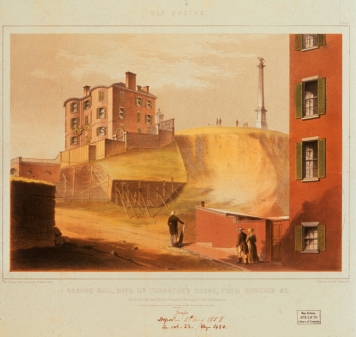
5th August 1858: Beacon Hill, Boston, the site of the oldest surviving Black Church and a centre of the abolitionist movement. (Photo by MPI/Getty Images)

5th August 1858: Beacon Hill, Boston, the site of the oldest surviving Black Church and a centre of the abolitionist movement. (Photo by MPI/Getty Images)

Did some African American slaves prefer suicide, even if they were afraid of dying?  How many chose to end their lives?  How many regretted not having the means to do so? Suicide requires courage, but requires less courage than submitting to torture. Death is not always the worst outcome, what’s worst is suffering that goes on and on, horror without pause. Whereas hope is a leap of faith, courage is an act of will. It is willful courage that is required to face torments one cannot change or escape.

Yet, in spite of the brutality and dehumanization of slavery, African Americans developed a strong tradition of song, often inspired by their religion.

There is no greater testament to the tenacity of the human spirit than the songs of slaves.  We, regardless of our heritage, have much to learn from the ways they dug deep within to discover, beyond their physical and mental suffering, embers of joy and loving-kindness, embers they, with willful courage, turned into light.

Matthew 5:15-16  (Part of Jesus’ Sermon on the Mount):

15  No one lighting a lamp puts it under the bushel basket, but on the lampstand, and it gives light to all in the house.
16  In the same way, let your light shine before others, so that you may see your good works and give glory to your Father in heaven.

This Little Light of Mine (African American spiritual, circa 1750-1875):

This little light of mine
I’m gonna let it shine.
This little light of mine,
I’m gonna let it shine.
This little light of mine,
I’m gonna let it shine.  Let it shine, let it shine, let it shine.

Ev’ry-where I go,
I’m gonna let it shine.
Ev’ry-where I go,
I’m gonna let it shine.
Ev’ry-where I go,
I’m gonna let it shine.  Let it shine, let it shine, let it shine.

Building up a world,
I’m gonna let it shine.
Building up a world,
I’m gonna let it shine.
Building up a world,
I’m gonna let it shine.  Let it shine, let it shine, let it shine.

References:  “This Little Light of Mine,” Hymn #118 in Singing the Living Tradition (Boston:  Beacon Press, 1993); Between the Lines:  Sources for Singing the Living Tradition, edited by Jacqui James, 2nd ed. (Boston:  Skinner House Books, 1995).

#36 The luminous gospel of transcendental universalism

11 Sunday Oct 2009

Posted by TheNakedTheologian in God, Religion, Religious Philosophy, Theology

≈ 1 Comment

Tags

Emersonian transcendentalism, Forrest Church, universalism

iStock_000009265015XSmall

The Reverend Forrest Church died of esophageal cancer last week at the much-too-young age of 61.

His life story continues to speak to us.

Church began his ministerial career preaching the gospel of rational belief—the kind of gospel that limits itself to teachings the human mind can comprehend and experience can confirm.  He surveyed the theological field for its various doctrines and claims about God and laid them on a dissecting table so he could cut them open and discover how they worked.  Did they meet the constraints of rationality?  If no, he’d toss them in the waste bin. If yes, he’d add them to his keeper pile.  This approach challenged him intellectually but left him spiritually dry.

He studied God, but God was absent to him.

He turned to alcohol and used it as a buffer against his emptiness.  The drinking worked—for many years, anyway.  He managed to drink and juggle his hefty duties as senior minister of All Souls Unitarian Universalist Church in Manhattan.  He even managed to write several books.

In the late 1980’s, he realized that he needed God’s help to find peace.  Not at home in himself, he began to look for a home in the universe while still sharing the common Unitarian aversion to God-language.  He’d kept his altar crowded with “icons to knowledge” but now he cleared a space for mystery.  While most of his beliefs had not changed, he declared that religion was a human response to the inevitability of death.  This inevitability gave meaning to human love because the more love we found and gave, the more we risked losing.

Eventually, he embraced God-language and used it more readily than his co-religionists liked.  But how could he keep the saving news to himself?   He’d found God and God filled the God-shaped hole he’d harbored and denied for much too long.  God, he proclaimed, was “that which is greater than all and yet present in each.”

He loved God, and God was present to him.

The Universalist strand of his faith tradition, with its promise of shared salvation, held particular appeal for Church, especially when integrated with Emersonian transcendentalism.  Christian became an important part of his religious identity and he adopted the label of Christian Universalist.  As such, he made room in his theology for many religious approaches.  The cathedral of the world became his credo—while there was a single Reality or Truth (God), this reality shone through the many windows of the world’s cathedral.  The windows’ patterns refracted the light into multiple patterns suggesting different meanings.  One Light, many patterns.  One Truth, many meanings.

Church often said that God was “the most famous liberal of all time.”  Every word that describes God is a synonym for liberal, he explained:  “God is munificent and openhanded.  The creation is ample and plenteous.  As healer and comforter, God is charitable and benevolent.  As our redeemer, God is generous and forgiving…God has a bleeding that simply never stops.”

May God, as healer and comforter, heal and comfort his family.

References:  Gary Dorrien, The Making of American Liberal Theology:  Crisis, Irony, & Postmodernity 1950-2005 (Louisville, KY:  Westminster John Knox Pres, 2006), 455-459; Forrest Church, The CATHEDRAL of the WORLD:  A Universalist Theology (Boston:  Beacon Press, 2009).

#35 The art of forgiving God

04 Sunday Oct 2009

Posted by TheNakedTheologian in God, Philosophy of Religion, Religious Philosophy, Theology

≈ 2 Comments

Tags

atonement, forgiveness, sins of commission, sins of omission, Yom Kippur

iStock_000004991754XSmall

Yom Kippur just passed, that Jewish day of atonement and of human-granted and God-granted forgiveness.

But what about God’s atonement for God’s sins of omission and of commission?

After all, many of us hold God responsible for the tragedies that plague our world.  “Look God,” we might say, “Take a good look around will You?  See the people weeping over here and see the people weeping over there—why don’t You do something about their troubles?  Why do You allow their sorrows to continue?  You’re God, right?  So You could make the suffering stop if You wanted.”

Some of those who hold God responsible for standing-by and doing nothing, don’t believe in miracles.  When it comes to miracles, they’re deniers.  They’re the ones who would stand on a cliff’s edge on a lovely, starry night, and having asked God for a sign, would continue to wait even after a meteor with a sparkler-like tail swooshed in a majestic arc across a darkened sky.  They would notice the meteor but expect that a scientific explanation would neatly explain why the meteor appeared at this particular time and place.

The miracle-deniers are the ones who, having cursed God for failing to rid us of misery, no longer wait for God’s answer.  They wait even after they notice the letters SORRY tucked among some garish graffiti.

Basically, then, miracle-deniers are demanding miracles from God without believing in them.  Because, wouldn’t the interventions they expect from God qualify as miracles?  Aren’t they asking God to act like a cosmic magician who’s every wish (and ours too) is fulfilled instantaneously and effortlessly?

What if God was like a human agent with intelligence, with the capacity to make decisions, and with some super-powers thrown into the mix?  What if this God was willing to interfere in our affairs?  Then our lives would be either be less predictable than they are now or we would have unmitigated peacefulness.

If God interfered now and again, then events would occur around us, and to us, without any causal explanation.  The cause-and-effect rules we now perceive would become inconsistent and unreliable.

If God intervened every time suffering could occur, then we’d get into car accidents but walk away unscathed.  Parents would always die before their children.  With God’s consistent interference we’d live in what we call paradise, or in the end-time some call the Kingdom of God.

Isn’t it more likely that if an agent-like God is interested in human-affairs, God is sorrowful when we experience pain?  God weeps when we weep.  God suffers when we suffer.  But isn’t it also more likely that the agent-God works tirelessly but imperceptibly through cosmic and human history to help us achieve the goal of becoming what God would want us to be?  As of yet, there is no evidence that any of us are even close to 100% perfect human beings.

If the agent-God could wave a wand and change the course of history instantly, then why not simply ask God for this miracle—to turn all human beings, present and future, into 100% moral beings?  Wars would end instantly.  Crime, too.  Children would never suffer at the hands of others.  No one would starve or go without shelter or medical attention—as fully moral beings, we’d busy ourselves taking care of those in need.

Sit with this miracle for just a few minutes—imagine every single person, you included—100% moral, 100% of the time.

To return to the original question—if God has agency, then God is, in a sense, responsible for the tragedies that plague this world—responsible because God doesn’t step in and bring them to a halt.  Perhaps the agent-God does atone and hopes for our forgiveness.  If God prefers to work tirelessly, but surreptitiously to end our tragedies, then can God be forgiven for this choice?  There’s no good answer to this question.

Here’s the bottom line, then, for those who hold God responsible—it’s up to each to decide whether and how much s/he can forgive God.  Easy formulas are lacking.  Forgiveness, even (or especially) of God likely requires practice (to improve) and patience (to persevere).

The Naked Theologian

Unknown's avatar

Enter your email address to follow this blog and receive notifications of new posts by email.

Top Posts

  • #29 Wisdom, Prophecy and God
  • #25 Spiritual (But Not Religious)
  • #33 Theology: it's all about conversation

Recent Posts

  • #74 After the “Death of God,” new gods?
  • #73 Will Her Methodist Faith Help HRC Make a Comeback?
  • #72 Trump’s White Evangelical Voters: What Were They Thinking?

Recent Comments

Tulayhah's avatarTulayhah on #69 How To Read the Qur…
clinton's avatarclinton on #18 God and the Devil duke it…
marysedl's avatarmarysedl on #72 Trump’s White Evange…
DaCoot's avatarDaCoot on #11 What’s in a name? Go…
Home And Spirit's avatarHome And Spirit on #68 Suffering on Trial

Categories

Ethics God Philosophy of Religion Prayer Religion Religious Philosophy Spiritual Exercises Spirituality Theological Ethics Theology

Posts by Category

  • Ethics (15)
  • God (55)
  • Interpretation (1)
  • Philosophy (5)
  • Philosophy of Religion (27)
  • Philosophy of Religions (8)
  • Politics (1)
  • Prayer (11)
  • Religion (57)
  • Religious Philosophy (26)
  • Spiritual Exercises (9)
  • Spirituality (15)
  • Theological Ethics (26)
  • Theology (55)

Archives

Follow me on Twitter

My Tweets

Create a free website or blog at WordPress.com.

Privacy & Cookies: This site uses cookies. By continuing to use this website, you agree to their use.
To find out more, including how to control cookies, see here: Cookie Policy
  • Subscribe Subscribed
    • The Naked Theologian
    • Join 67 other subscribers
    • Already have a WordPress.com account? Log in now.
    • The Naked Theologian
    • Subscribe Subscribed
    • Sign up
    • Log in
    • Report this content
    • View site in Reader
    • Manage subscriptions
    • Collapse this bar

Loading Comments...