
• About

The Naked Theologian

~ A blog for stripped-down theology

The Naked Theologian

Category Archives: God

#38 Multifaith squabble–over love!

31 Saturday Oct 2009

Posted by TheNakedTheologian in God, Philosophy of Religion, Philosophy of Religions, Religion, Theological Ethics, Theology

≈ Leave a comment

Tags

Multifaith dialogue, Papal encyclical, Pope Benedict XVI, Thomas Aquinas, Thomism

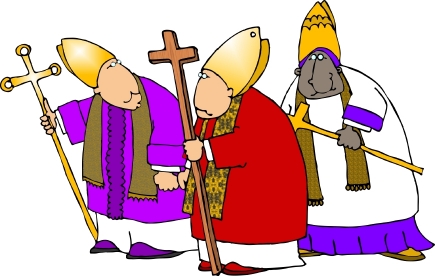
iStock_000000779206XSmall

If you imagine that multifaith dialogue is easy, this post will change your mind. Continue reading but be warned that you’ll be asked to tease out the intricacies of an argument between the University of Chicago historian, David Nirenberg, a champion of secularism, and His Holiness, Pope Benedict XVI, the champion par excellence of Roman Catholicism.

Ideally, when we enter into a dialogue about religious beliefs, we do so with a genuine desire for authentic conversation.  We attempt to understand, as much as possible, our interlocutor’s point of view especially when we find his or her point of view offensive.  But, in the present case, even a brilliant scholar like Nirenberg, who’s written insightful books about the three Abrahamic religions, loses his patience and calls on His Holiness to stop speaking like a Roman Catholic.

Nirenberg aired his differences with the Pope in a September 23, 2009, article in The New Republic, “Love and Capitalism,” in which he reviewed Benedict’s book-length encyclical, “Caritas in Veritate:  On Integral Human Development in Charity and Truth.”

The problem, for Nirenberg, is not the Pope’s claim to the Truth:  “Popes,” Nirenberg writes, “have the right, indeed the obligation, to teach believers the truth as they are given to perceive it, no matter how controversial.”

No, Nirenberg’s disagreement with the Pope centers around the meaning of the term “caritas,” a word that can be loosely translated into English as “charity” or “love.”

For Roman Catholics, however, caritas doesn’t mean plain old love or sympathy or concern or even charity in the way that most of us might use such words over a glass of beer. Caritas, as used by Roman Catholic theologians, including Benedict, is a technical term with a history that dates back to the 3rd Century Church Father, St. Augustine.

Nirenberg gets the Augustine connection (he quotes Augustine several times), but he doesn’t seem to recognize that Augustine’s usage of caritas has been superseded.  In the 13th Century, the theologian and so-called Angelic Doctor of the Church, St. Thomas Aquinas, redefined caritas.  And Aquinas, it turns out, is the key to an accurate understanding of Benedict’s “Caritas in Veritate.”  Why?  Because since the late 19th century (thanks to Pope Leo XIII), Aquinas’s thought has dominated Roman Catholic theology, including its usage of the technical theological term, caritas.

For Aquinas, caritas is a special virtue—a theological virtue, because human beings are incapable of caritas on their own.  The virtue of caritas requires God’s gracious gift.  It is the most important of the three theological virtues (the other two are hope and faith).  Aquinas taught, and the Pope agrees, that only members of the Roman Catholic Church who participate in its sacramental life may receive God’s gift of the theological virtues, including caritas.

The bottom line, then: if you’re not a Roman Catholic, God will pass you over when it comes to granting caritas.  And without God-granted caritas, you may act in what appears to be a virtuous, loving way, but your actions can never be perfectly virtuous since you, a mere human being, are the source of the virtuous acts.

In his encyclical, Benedict claims that only Roman Catholicism offers the possibility of the kind of universal fraternity necessary for authentic community. But he’s following Aquinas here; only Roman Catholicism offers a path to God-given love (caritas), and God-given love (caritas) is required for universal fraternity.  Only with God-given love are we able to love God first (as the first proper object of our love), and then, and only then, out of love for God, are we able to love God’s creatures—i.e. other human beings.

A bit more familiarity with Aquinas’ thought (called Thomism, another technical term!) is necessary to understand the Pope’s encyclical.  Aquinas (unlike Augustine) has a high anthropology.  According to him, there are some capacities all persons enjoy, whether they are Roman Catholic or not.  For example, he maintained that every person is born with the ability to reason.  Thanks to our natural reason, we can come together and solve problems.

With this brief primer on Thomism, we could have anticipated what Benedict did, in fact, say in his encyclical:  “Reason, by itself, is capable of grasping the equality between men and of giving stability to their civic coexistence, but it cannot establish fraternity.  This originates in a transcendent vocation from God the Father, who loved us first, teaching us through the Son what fraternal charity is.”

Like every good book reviewer, Nirenberg is tasked with picking a fight over some point and so he chooses this one:  “The problem is that Benedict is claiming to offer general answers to global questions that affect people of every faith (and sometimes of no faith), while at the same time insisting that the only possible answer to those questions is Catholicism.  Such a suggestion might be a plausible prescription for global peace and development in a Catholic world, but the world is not Catholic.”

But Benedict offers general answers to global questions that affect people of every faith (including some of no faith) because he believes (following Aquinas) that every human being has reason.  And because we’re blessed with reason, Benedict can issue a global call for us to work together to address global problems.  However (still following Aquinas), fraternal charity, which grows out of caritas or God-given love, is only available to Roman Catholics.  If the rest of the world wants to co-exist in fraternal charity, it must convert and join the Roman Catholic Church.

For Benedict to discuss the global crisis in purely secular terms would be to act without love (in the ordinary sense of that word).  Would it be loving of Benedict to choose silence over sharing with the non-Catholic part of the world the fact (as he perceives it) that there is only one path to fraternal charity?

Nirenberg, however, wants Benedict to set his Roman Catholicism aside and offer global answers “taught in a way that seeks to transcend the boundaries of the traditions that produced them.”  What if Benedict made an analogous demand of Nirenberg?  He’d insist Nirenberg leave his secular commitments aside and offer teachings “taught in a way that seeks” to reflect the Roman Catholic tradition!

Which man has the more loving approach?

At the very least, Benedict engages in authentic multi-faith dialogue.  He doesn’t pretend to set aside his convictions—as if he could!—rather, he shows the full set of cards he’s holding in one hand and extends the other hand in greeting.  We may, like Nirenberg, not like the cards he’s holding, but we can appreciate the fact that he’s showing us what he’s got.

One of the goals of an authentic conversation about religion is to try to understand our conversation partner’s point of view.  For this we must set aside our own religious commitments and adopt a willingness to interpret (i.e. make familiar the unfamiliar) what he or she shares with us.  Nirenberg was tasked with interpreting the Pope’s latest encyclical.  Unfortunately, conversing with an author via his or her book does not offer the possibility of a back-and-forth dialogue.  If he and the Pope had had the opportunity to get together at the local bar and talk over a glass of beer, Nirenberg could simply have asked, “Exactly what do you mean, Your Holiness, by caritas?”  The two could have had a brief discussion about their differing definitions of love.  Then they could have moved on to discuss something more important—the Pope’s central concern of his encyclical—how to solve our global problems.

References:  David Nirenberg, “Love and Capitalism,” The New Republic 240, no. 4868 (23 September 2009): 39-42; Waldo Beach and H. R. Niebuhr, eds, Christian Ethics:  Sources of the Living Tradition, 2nd ed. (New York:  The Ronald Press Company, 1973).

#36 The luminous gospel of transcendental universalism

11 Sunday Oct 2009

Posted by TheNakedTheologian in God, Religion, Religious Philosophy, Theology

≈ 1 Comment

Tags

Emersonian transcendentalism, Forrest Church, universalism

iStock_000009265015XSmall

The Reverend Forrest Church died of esophageal cancer last week at the much-too-young age of 61.

His life story continues to speak to us.

Church began his ministerial career preaching the gospel of rational belief—the kind of gospel that limits itself to teachings the human mind can comprehend and experience can confirm.  He surveyed the theological field for its various doctrines and claims about God and laid them on a dissecting table so he could cut them open and discover how they worked.  Did they meet the constraints of rationality?  If no, he’d toss them in the waste bin. If yes, he’d add them to his keeper pile.  This approach challenged him intellectually but left him spiritually dry.

He studied God, but God was absent to him.

He turned to alcohol and used it as a buffer against his emptiness.  The drinking worked—for many years, anyway.  He managed to drink and juggle his hefty duties as senior minister of All Souls Unitarian Universalist Church in Manhattan.  He even managed to write several books.

In the late 1980’s, he realized that he needed God’s help to find peace.  Not at home in himself, he began to look for a home in the universe while still sharing the common Unitarian aversion to God-language.  He’d kept his altar crowded with “icons to knowledge” but now he cleared a space for mystery.  While most of his beliefs had not changed, he declared that religion was a human response to the inevitability of death.  This inevitability gave meaning to human love because the more love we found and gave, the more we risked losing.

Eventually, he embraced God-language and used it more readily than his co-religionists liked.  But how could he keep the saving news to himself?   He’d found God and God filled the God-shaped hole he’d harbored and denied for much too long.  God, he proclaimed, was “that which is greater than all and yet present in each.”

He loved God, and God was present to him.

The Universalist strand of his faith tradition, with its promise of shared salvation, held particular appeal for Church, especially when integrated with Emersonian transcendentalism.  Christian became an important part of his religious identity and he adopted the label of Christian Universalist.  As such, he made room in his theology for many religious approaches.  The cathedral of the world became his credo—while there was a single Reality or Truth (God), this reality shone through the many windows of the world’s cathedral.  The windows’ patterns refracted the light into multiple patterns suggesting different meanings.  One Light, many patterns.  One Truth, many meanings.

Church often said that God was “the most famous liberal of all time.”  Every word that describes God is a synonym for liberal, he explained:  “God is munificent and openhanded.  The creation is ample and plenteous.  As healer and comforter, God is charitable and benevolent.  As our redeemer, God is generous and forgiving…God has a bleeding that simply never stops.”

May God, as healer and comforter, heal and comfort his family.

References:  Gary Dorrien, The Making of American Liberal Theology:  Crisis, Irony, & Postmodernity 1950-2005 (Louisville, KY:  Westminster John Knox Pres, 2006), 455-459; Forrest Church, The CATHEDRAL of the WORLD:  A Universalist Theology (Boston:  Beacon Press, 2009).

#35 The art of forgiving God

04 Sunday Oct 2009

Posted by TheNakedTheologian in God, Philosophy of Religion, Religious Philosophy, Theology

≈ 2 Comments

Tags

atonement, forgiveness, sins of commission, sins of omission, Yom Kippur

iStock_000004991754XSmall

Yom Kippur just passed, that Jewish day of atonement and of human-granted and God-granted forgiveness.

But what about God’s atonement for God’s sins of omission and of commission?

After all, many of us hold God responsible for the tragedies that plague our world.  “Look God,” we might say, “Take a good look around will You?  See the people weeping over here and see the people weeping over there—why don’t You do something about their troubles?  Why do You allow their sorrows to continue?  You’re God, right?  So You could make the suffering stop if You wanted.”

Some of those who hold God responsible for standing-by and doing nothing, don’t believe in miracles.  When it comes to miracles, they’re deniers.  They’re the ones who would stand on a cliff’s edge on a lovely, starry night, and having asked God for a sign, would continue to wait even after a meteor with a sparkler-like tail swooshed in a majestic arc across a darkened sky.  They would notice the meteor but expect that a scientific explanation would neatly explain why the meteor appeared at this particular time and place.

The miracle-deniers are the ones who, having cursed God for failing to rid us of misery, no longer wait for God’s answer.  They wait even after they notice the letters SORRY tucked among some garish graffiti.

Basically, then, miracle-deniers are demanding miracles from God without believing in them.  Because, wouldn’t the interventions they expect from God qualify as miracles?  Aren’t they asking God to act like a cosmic magician who’s every wish (and ours too) is fulfilled instantaneously and effortlessly?

What if God was like a human agent with intelligence, with the capacity to make decisions, and with some super-powers thrown into the mix?  What if this God was willing to interfere in our affairs?  Then our lives would be either be less predictable than they are now or we would have unmitigated peacefulness.

If God interfered now and again, then events would occur around us, and to us, without any causal explanation.  The cause-and-effect rules we now perceive would become inconsistent and unreliable.

If God intervened every time suffering could occur, then we’d get into car accidents but walk away unscathed.  Parents would always die before their children.  With God’s consistent interference we’d live in what we call paradise, or in the end-time some call the Kingdom of God.

Isn’t it more likely that if an agent-like God is interested in human-affairs, God is sorrowful when we experience pain?  God weeps when we weep.  God suffers when we suffer.  But isn’t it also more likely that the agent-God works tirelessly but imperceptibly through cosmic and human history to help us achieve the goal of becoming what God would want us to be?  As of yet, there is no evidence that any of us are even close to 100% perfect human beings.

If the agent-God could wave a wand and change the course of history instantly, then why not simply ask God for this miracle—to turn all human beings, present and future, into 100% moral beings?  Wars would end instantly.  Crime, too.  Children would never suffer at the hands of others.  No one would starve or go without shelter or medical attention—as fully moral beings, we’d busy ourselves taking care of those in need.

Sit with this miracle for just a few minutes—imagine every single person, you included—100% moral, 100% of the time.

To return to the original question—if God has agency, then God is, in a sense, responsible for the tragedies that plague this world—responsible because God doesn’t step in and bring them to a halt.  Perhaps the agent-God does atone and hopes for our forgiveness.  If God prefers to work tirelessly, but surreptitiously to end our tragedies, then can God be forgiven for this choice?  There’s no good answer to this question.

Here’s the bottom line, then, for those who hold God responsible—it’s up to each to decide whether and how much s/he can forgive God.  Easy formulas are lacking.  Forgiveness, even (or especially) of God likely requires practice (to improve) and patience (to persevere).

#33 Theology: it’s all about conversation

17 Thursday Sep 2009

Posted by TheNakedTheologian in God, Philosophy of Religion, Theology

≈ Leave a comment

Tags

circular thinking, empirical theology, Karen Armstrong, Paul Tillich

Handshake Silhouette

The work of Paul Tillich (1886-1965), who is considered by many to be the leading Protestant theologian of the 20th century, offers an intriguing perspective on the God-musings of religion-scholar Karen Armstrong (see Post #32).   If nothing else, taking a look at Karen Armstrong’s views from the perspective of his work reminds us that theology is an ongoing conversation—at least for those with open, inquiring minds.

For the purposes of this post, we’ll set aside most of Tillich’s three volume systematic-theology and focus on a mere two pages in the introduction to his first volume, entitled Reason and Revelation, Being and God.  In case you’d like to reflect further on what follows, or want to bring your own mojo to bear on Tillich’s work, check pages 42-43.

In this short, but typically brilliant, part of his introduction, Tillich discusses what he calls the “experiential theology” which has grown out of the “evangelical tradition of American Christianity.”  Although Tillich was born and educated in Germany, a large swath of his career took place on American soil, giving him the unique ability to reach objective, well-informed conclusions.  He perceived that experiential theology, at least the kind particular to the American situation, attempts to generate an “empirical theology” grounded in experience.

Now we can bring Karen Armstrong into the conversation because her “sense-of-God” approach falls neatly into Tillich’s “empirical theology” category.

The first move of what Tillich calls empirical theology is to show that “religious objects [like God] are not objects among others.”  Armstrong made this exact move when she decided God was not an object among objects.  God was not like a plate or a glass or a table she could pick up and examine.  Those objects existed, and so they could be found.  But since she couldn’t find God (like an object), making God’s existence the starting point for her search had led her down a dead end.  That path had only served to alienate her from God—her travels had yielded nothing more than a shadowy abstraction.

Still with me?  Whoever said theology, even stripped-down theology, was simplistic?

Armstrong, having abandoning God’s existence as the starting-point for her search, found God when she identified a different starting-point—that of creating a “sense of God.”  In other words, she decided to look for God in what seemed, to her, to be the most secure source available—her own experiences.  Instead of starting with the question “Does God exist?” she started with “What does God mean to me?”

How many of you have reached a dead end like Armstrong’s and resorted to finding God in the quality or dimension of your own experiences?  If you have, then, like hers, yours is an American empirical theology.  Sounds impressive, doesn’t it?  Your friends’ jaws will surely drop open when you spring the words “American empirical theology” on them.  Try it and see.

Tillich further explains that American empirical theology agrees with European phenomenological theology a la Rudolph Otto in his famous book, The Idea of the Holy.   Now you can also tell your friends that your empirical theology has something in common with “phenomenological theology.”  A warning:  you’ll have to practice saying “phenomenological” several dozen times before you nail it.  But it’ll be worth it.  Your friends’ jaws will drop even lower.

Besides the concerns raised at the end of Post #32 by yours truly and by those who took the time (or had the time) to leave comments, Tillich identified a few problems with Armstrong’s empirical-theology approach.  Any theology, like most things in life, has its advantages and drawbacks.  The advantages, as Armstrong herself so well illustrated, was that she was able to find God after decades of fruitless search “out there”.

But here’s a potential drawback.  Let’s pretend that we’re using Armstrong’s empirical-theological method.  Since the whole of experience can’t serve as the source for a “sense of God,” we have to identify an experience as having a unique quality.  Surveying the vast set of our experiences, we look for one few that strike us as having a special quality, special enough so that we can label them religious experiences.  It could be that feeling of wonder when watching the sun rise (see Post #30), or an unexplainable feeling of calm in the midst of crisis (see Post #4).

This means that we’ve had the “special” experiences before we ever label them as such.  Until we assign to them the “special” status of religious as a result of theological analysis, the “special” experiences were simply part of the whole of our experiences.  Our theological analysis, looking for experiences to label religious, finds them.  Then, on the basis of these so-labeled religious experiences, we develop an empirical theology.  Philosophers call this circular thinking.

Is circular thinking a problem?  Not necessarily, but proponents of empirical theology should realize that their thinking is as circular as those who adopt other kinds of theologies, including ones that empirical-theology-proponents might find objectionable.

Are there any other (potential) downsides?  Empirical theology traps God in our experience.  God is “trapped” because God no longer transcends experience.  God, in the traditional sense of the God-Who-is-not-us is excluded from this kind of theology.  While such an entrapment is attractive for Armstrong, others will find it harder to walk away from theologies that locate God outside of the human realm.

The bottom line is that, like the conversation between Tillich and Armstrong in this post, theological conversation is ongoing.  All theologies, including our own are (or should be) works in progress.  As such, we benefit (as do academic theologians) from the ability to be clear about our assumptions and about what counts as adequate criteria of validity for us.  Any theology can be called into question.  Plusses and minuses are part of the package.  Does this mean we shouldn’t adopt an empirical theology like Armstrong’s?  Not at all.  But theologians, academic or not, will want to informed about the strengths and weaknesses of their positions.

#32 The wait for God is over

09 Wednesday Sep 2009

Posted by TheNakedTheologian in God, Religious Philosophy, Theological Ethics, Theology

≈ 3 Comments

Tags

existence, history of God, Karen Armstrong, reality

iStock_000004087861XSmall

Like many of us, the religion-scholar and popular author, Karen Armstrong, spent decades waiting for God.  Raised a Roman Catholic, God remained a shadowy figure even as she sat through countless sermons and countless catechism classes.  God, described to her in abstract terms, meant little to her.  God existed—of this, Armstrong was certain, at least on an intellectual level—but God remained out of reach, too remote to become a reality for her.

Sound familiar?

Armstrong has more patience than the average Joe or Jane and so she continued to wait for God.  She was convinced that if she kept up her efforts to find God, she would eventually be rewarded by a vision that “would transfigure the whole of created reality.”  To prepare for this vision, she joined an order of nuns.

Armstrong never did glimpse “the God described by the prophets and mystics.”  She suffered from what some call “spiritual dryness.”  Except that she’d never been blessed with a period of spiritual wetness to help her through the dryness.  Unable to maintain the status quo, she decided, with regret, to abandon the religious life.  Soon, her belief in God’s existence slipped away.

Although she’d stopped hoping for an encounter with God, Armstrong maintained her academic study of the history of religions.  Ultimately, the research that went into writing her bestseller, The History of God, put her in touch with clergy from the three “religions of the book”— Judaism, Christianity, and Islam.  Several of these rabbis, priests, and Sufis offered her this advice.  “Instead of waiting for God to descend from on high,” they suggested, she “should deliberately create a sense of him for” herself.

Reflecting on her many years of waiting (in vain) for God, she realized that she’d always looked for God who, she’d believed, existed “out there.”  But God wasn’t to be found “out there.”  God wasn’t an ordinary object like a glass or a plate or a table.  God wasn’t an object she could pick up and examine.

She wrote that, in hindsight, the rabbis, priests, and Sufis would “have told me that in an important sense God was a product of the creative imagination, like the poetry and music that I found so inspiring.”

They would have encouraged her to stop looking for God “out there” and, instead, to find ways to make God a reality for herself.  Also, “A few highly respected monotheists would have told me quietly and firmly that God did not really exist—and yet that ‘he’ was the most important reality in the world.”

Must something exist to be real?  Tough question.  Lucky for us that Armstrong likes brainteasers of this sort.   After pondering the question, she decided that she could set aside the question of God’s existence.  By setting aside that question, she freed herself to create a sense of God’s reality for herself.  She could even make her sense of God the most important reality.

Hallelujah.  Her wait was over.  She had finally found God.

To recap, Armstrong ended her wait by changing the question from “Must God exist to be real?” to “How can I make God real for myself?”

Here’s a note of concern, though.  Armstrong’s God is no doubt as lovely and gentle as the poetry and music she finds inspiring.  But (there’s always a but, isn’t there?) for the rest of us, are checks needed on the sense of God we create for ourselves?  How do we put a damper on creating a sense of God Who looks like a green-eyed spaghetti monster?  The part about the green eyes is too over-the-top for an acceptable God, don’t you agree?  Seriously, how do we put a damper on say, a sense of God Who looks the other way when we make promises we don’t intend to keep?  Or worst, Who orders us to harm or kill others?  Here, the September-11-2001 terrorists’ God comes to mind.

Reference:  Karen Armstrong, A History of God:  The 4,000-Year Quest of Judaism, Christianity and Islam (New York:  Ballantine Books, 1993).

#31 A “why-do-the-right-thing” quiz

30 Thursday Jul 2009

Posted by TheNakedTheologian in Ethics, God, Theological Ethics

≈ 4 Comments

Tags

decision-making, moral maxim

iStock_000008497727XSmallNOTE:  The Naked Theologian will be on hiatus for the month of August and will return after the Labor Day holiday.

A Scenario:

You stop by the convenience store to pick up a gallon of milk.  On your way out, you hand the cashier a $10 bill.  After she gives you your change, you realize she confused your $10 for a $20.  You now have more money than when you walked into the store. (Granted, this scenario is a stretch.)  The cashier has started to ring up the next customer and you have to decide whether to give the money back.

A Question:

Why would you do the right thing? (Ethicists call this “the metaethical question”—and now you can too).

From the list below, choose all the reasons you’d do the right thing.

1.    fear of God’s punishment
2.    you were in a good mood
3.    it was the most expedient thing to do
4.    habit
5.    c’mon, there was only $10 on the line!
6.    because God rewards the virtuous
7.    your better instincts took over
8.    you knew you’d feel good about yourself for doing the right thing
9.    hmmmmm…don’t know
10.  it was the best decision given the circumstances
11.  it was the right thing to do, period
12.  the cashier was cute and you’re between partners
13.  whim; you never really know what you’re going to do ahead of time
14.  you knew others would think you rock when you’d tell them what you did
15.  your happiness comes first—this choice made you happy
16.  the happiness of others comes first—this choice made the cashier happy
17.  you tried to imagine what kind of world you’d like to live in, and then decided
18.  you wanted to set a good example for your kids
19.  God calls, 24/7 for your response to the demand that you bring justice and
loving-kindness into the world
20.  you expected the cashier would thank you profusely; you like being thanked
21.  you tossed a coin; it landed in her favor
22.  the cashier looked like she needed the bucks more than you did
23.  you’re on a personal quest for moral perfection
24.  her brother is 6’5”, 250 lbs.—he hurts people who take advantage of his sis
25.  you were afraid you’d get caught and the police would get called in
26.  you were afraid you’d get caught and be publicly humiliated
27.  _____________________________________  (other)

More Questions:

From the list, select the 3 best reasons for doing the right thing in any moral situation?

Are the 3 best reasons different from the ones you chose with regard to the cashier?

If the 3 best reasons don’t always motivate you, why not?

Can you boil down the 3 best reasons to a single reason?  This is your maxim—in other words, this is the overriding moral rule you would prefer to use when trying to decide what to do.

Comments?

#30 Deists of the world, unite!

22 Wednesday Jul 2009

Posted by TheNakedTheologian in God, Philosophy of Religion, Theological Ethics, Theology

≈ 2 Comments

Tags

deism, Supreme Being, Voltaire, worship

dreamstimefree_1720114

Deist, deist, theist—say those words in Jersey (pronounced Joy-zie) and they all sound the same.  Fortunately, spelling will help us keep tabs on which is which.  Besides spelling, there are important differences.  Of note: Deists (capital D) went the way of the dodo bird and deists (lowercase d) are rarer than diamonds.  Theists rule–like it or not.

Now to clarify.  A story about François-Marie Arouet , a.k.a. Voltaire (1694-1778), nicely illustrates the difference between a Deist, a deist, and a theist.  He’s considered by people-in-the-know to have been a “mystical, and even emotional deist.”

Voltaire was already eighty years old when this incident took place.  He rose before dawn and, with a visitor, he climbed a nearby hill to watch the sunrise.  Upon reaching the top, Voltaire was overcome by the beauty of the morning scene.  He took off his hat and knelt, exclaiming:  “I believe, I believe in you, Powerful God, I believe.”  Then, on his feet again, he drily proclaimed, “As for monsieur the Son and madame his Mother, that is a different story!”

Voltaire was a French Deist (note the capital D).  Deism (with a capital D) was a religious movement. Also called the “religion of reason,” it originated in 18th century England.  

Today, if someone adopts tenets like those of the English and French Deists, he or she qualifies as a deist (lowercase d).  How you doing with keeping the capital D’s and the lowercase d’s straight?

Here’s more.  Deism, deism and deists (words derived from the Latin for god, deo) subscribe to a God who created us and the universe.   Since then, the universe has continued to operate under reliable and discoverable laws.  And since then, God has not mucked with the laws of nature or with our personal lives. 

By contrast, theism and theists (words derived from the Greek for god, theos) subscribe to a personal God, active in human history, and guarantor of eternal life. You know—the beliefs to which most of today’s religious believers in the West subscribe.  In case you forgot, let me remind you–theists rule.

Probably because French philosophes like Voltaire were literary individuals, not trained philosophers, they were able to popularize and disseminate the new religious movement.  They believed (wrongly, it turns out) Deism would emancipate society from ignorance and fanaticism. 

Here’s how, in a lightly adapted passage, Voltaire described the deist:

A deist is a person firmly persuaded of the existence of a Supreme Being equally good and powerful, who has formed all existences; who perpetuates their species, who punishes crimes without cruelty, and rewards virtuous actions with kindness.  

The deist does not know how God punishes, how God rewards, how God pardons, for he is not presumptuous enough to flatter himself that he understands how God acts; but he knows that God does act and that God is just.  The difficulties opposed to a providence do not stagger him in his faith, because they are only great difficulties, not proofs.

He does not join any of the sects, who all contradict themselves.  His religion is the most ancient and the most extended, for the simple adoration of a God preceded all the systems in the world.

He believes that religion consists neither in the opinions of incomprehensible metaphysics, nor in vain decorations, but in adoration and justice.  To do good–that is his worship; to submit oneself to God–that is his doctrine.  He succours the poor and defends the oppressed.

Does this describe you?  Then you’re a deist. 

If so, it may be instructive to consider why Deism, the religious movement, was short-lived. 

Yes, Deism died in fairly short order both in England (in its more theoretical and abstract version) and in France (in its more popular and literary version).  

In place of Christianity, Voltaire envisioned a rather vague, popular form of Deism.  Doctrine would be reduced to belief in a just God, whose service was the practice of virtue.  Worship would be simple and would consist primarily in praise and adoration and lessons in morality. 

According to religious-studies scholar, James Livingston, Deism fizzled, in part, because it failed to attract the masses.  Why?

 1.            It was too abstract, too intellectual in spite of its claim to simplicity; feeling and aesthetic sense are required of any religious faith that expects a wide appeal

2.            It lacked unity—its radical demands for autonomy were liberating but did not encourage the shared sense of faith and worship necessary for congregation-building

So, deists of the world, you’re likely feeling pretty alone.  There aren’t many of your kind.  And anyway, you (supposedly) aren’t the sort to seek each other out to worship together.  Which is why there’s not a First Deist Church of insert-your-town’s-name-here.  Why not unite and start one today?  Dare to prove the experts wrong.

HNFFT:  If you qualify as a deist, what do you say to the charge that your beliefs are too abstract and intellectual for most people (this is not necessarily a negative)?  How do feelings and aesthetics come together with your deistic beliefs?

Reference:  James C. Livingston:  Modern Christian Thought:  The Enlightenment and the Nineteenth Century, vol 1, 2nd ed. (Upper Saddle River, NJ:  Prentice Hall, 1997), p. 26-28.

#29 Wisdom, Prophecy and God

15 Wednesday Jul 2009

Posted by TheNakedTheologian in God, Prayer, Religion, Theology

≈ Leave a comment

Tags

forgiveness, Midrash, redemption

iStock_000005417329XSmallA Situation:

The man gazed guiltily at his old friend across his congealing plate of huevos rancheros.  He’d flown into Albuquerque the day before, two months after he’d watched his wife lose her battle with breast cancer.  Now, as he ate breakfast in the hotel restaurant, he agonized over the affair he’d had during his previous visit to Albuquerque a year earlier.  His wife had already been diagnosed.  He’d been scared and lonely.  He’d wanted to forget his troubles, if only for an hour or two.  “I should’ve stopped myself,” he sighed now with remorse.  Both men felt uneasy.  What the speaker wanted, more than anything else, was to make amends.  He wanted forgiveness, too.  But now that his wife had died, who could forgive him?  Most importantly, he wanted to be made whole once more; in other words, he wanted redemption.  But to whom could he make amends?  And who could forgive him? Where was redemption to be found?

A Midrash:  

Wisdom was asked:  what is the punishment of a sinner?  and answered:  sinners will be prosecuted by [their own] vice.

Prophecy was asked:  what is the punishment for the sinner?  and answered “the soul that sins, it shall die” [Ezek. 14:4].

God was asked:  what is the punishment of the sinner?  and answered:  let him do repentance [teshuva] and be expiated. 

Reference:  Amos Funkenstein, Perceptions of Jewish History (Berkeley: University of California Press, 1993), 69.

#27 Iran and an ethics of yielding

28 Sunday Jun 2009

Posted by TheNakedTheologian in Ethics, God, Theological Ethics

≈ Leave a comment

Tags

Ali Khamenei, Iran, Mahmood Ahmadinejad, Mir Hossein Mousavi, Montaigne

dreamstime_5824966There is the world as-it-is, and then there is the world that-could-be. 

In Iran, this is the world as-it-is:  the disputed legitimacy of the recent re-election of President Mahmoud Ahmadinejad propelled enraged supporters of his opponent, Mir Hossein Mousavi, into the sweltering streets of Teheran.   Ahmadinejad (with the blessing of the Supreme Leader, Ayatollah Ali Khamenei) pushed back with increasing brutality, deploying riot police and the much-feared, violence-prone, Basij paramilitary forces against unarmed citizens. 

But what if, in a world that-could-be, Ahmadinejad chose, instead, an ethics of yielding?  Yes, an ethics of yielding. 

One must be careful how one draws lessons from the past (thanks to their variety and number, historical events lend themselves too easily to an unscrupulous defense of almost any ideologically-driven claim).  But we can, for the sake of discussing a world that-could-be, draw on the work of Michel de Montaigne (1533-1592), a French essayist who lived and wrote during a time of bitter wars of religion between Protestants and Catholics, and a time of violent political conflict between rebellious nobles and the crown.  

A heterodox Catholic, Montaigne believed that God leaves us free to work out our lives on human terms.  And in the process of working out his own life on human terms, Montaigne developed a new ethics of accommodation based on shared trust and on shared humanity.  Opposed to the zealotry of the warring parties, Montaigne pleaded for an attitude of yielding both on the part of the victor and of the vanquished.  He even argued that his ethics of passivity was the best way to preserve each side’s desire for respect:  “You can swallow your pride and have it too, provided you learn how to be a good loser” (this quote comes from David Quint‘s Montaigne and the Quality of Mercy).

To return to the topic at hand–in a world that-could-be, if Ahmadinejad followed Montaigne’s recommendations, what effect, practically-speaking, would this have on Iran?  Having defeated the protestors with a massive and intractable show of force, Ahmadinejad could now preserve both his self-respect and that of the protestors by adopting a stance of clemency.  Toward those he formerly pursued, he could adopt a stance of flexibility, of softness.  And by choosing to identify with those he crushed and reduced to weakness, he would demonstrate courage.  Yes, courage–because he would allow his opponents to remain a threat to him and his government.  In the Iran that-is, Ahmadinejad has elevated himself to God-like status.  In the Iran that-could-be, Ahmadinejad would reclaim his humanity.

Montaigne’s ethics of yielding is not reserved for the victor.  The vanquished must also yield.  In the Iran that-could-be, the protestors would choose not to resist.  Instead, they would demonstrate the highest self-respect by acknowledging the power of Ahmadinejad, and by acknowledging the humanity and weakness they share with him.  They would disarm themselves, and trust in their foe.  A recent Newsweek image captured the difficult kind of clemency Montaigne had in mind; it showed a small group of protestors using their own bodies to shield a disarmed riot cop from the rage of their fellow protestors.  They had the courage to be merciful to their captured enemy even though they knew that he would probably try to harm them again on another day.

But even Montaigne, as much a skeptic in his time as most of us are today, dismissed the efficacy of preaching Christian humility.  He resorted, instead, to the ploy of promising the merciful victor an enhanced reputation.  After all, he pointed out, mercy aggrandizes the merciful one and the vanquished testify to the greatness of the one who has spared them. 

So, President Ahmadinejad, if you’re reading this post, will you show mercy, and yield to your countrymen and women’s longing for greater freedom and opportunity? Or will you maintain the course of the Iran-as-it-has-been and rely on fear and oppression to silence your opponents?  You have, after all, been handpicked by Ayatollah Khamenei to implement his dream of creating an Islamic caliphate.

But let’s try one last argument:  President Ahmadinejad, you miscalculated when you resorted to fraud to over-represent the election that you most likely won anyway.  Thanks to your miscalculation, you unleashed the greatest internal threat to Iran’s government since the Shah was toppled and you discovered the depth of your countrymen and women’s yearning for change.  Yield, Mr. Ahmadinejad, or you too might find yourself toppled.  If toppled you are, may your people yield and have mercy on you.

HNFFT:  Every day, we face situations where we have power-over others, or others have power-over us.  What could intentional weakness look like for you in those situations?  How could you practice an ethics of yielding?  

References:  Christopher Dickey, “The Supreme Leader,” 40-45, and Fareed Zakaria, “Theocracy and its Discontents,” 30-39, both in Newsweek, 29 June 2009; David Quaint, Montaigne and the Quality of Mercy (Princeton, NJ:  Princeton University Press, 1998).

#26 No theology, no science–no joke!

18 Thursday Jun 2009

Posted by TheNakedTheologian in God, Philosophy, Philosophy of Religion, Religion, Theology

≈ 2 Comments

Tags

infinity, Karsten Harries, modernity, Nicholas of Cusa, perspective, science

dreamstimefree_1964232

Science and theology are perceived, by some, as sitting on opposite banks of an abyss.  They assume that the twain never can (or should) meet.  But the separation between science and theology is a relatively recent phenomenon in the history of the West.  Until the Renaissance, science was barely more than a descriptive discipline, while theology, considered the queen of the sciences, was a richly speculative and complex field of endeavor.  

Fortunately, theology (yes—theology!) came to the rescue of science by providing it with a new understanding of reality.  Theology (yes—theology!) provided science with the intellectual and conceptual tools it needed to get out of a deep rut and push forward with several important discoveries.  These discoveries, in turn, allowed the development of technologies that now seem as essential to us as air or water.  What–life without a computer?  Without Wi-Fi?  A cell phone?  Pleeease! 

This shift in human beings’ way of looking at reality occurred long enough ago that we’ve mostly forgotten that we haven’t always grasped reality the way we do today. Here’s a key illustration:  there was a time when it was “common knowledge” that the earth moved around the sun.  Peoples in the ancient world conceived of reality such that, for them, astral bodies such as the sun and moon rotated in orderly and eternally-static circles around the earth.  Based on simple observation this view of reality made sense.  The things they could see appeared to revolve around them while the ground on which they stood seemed solid and stationary.   Today, of course, we know that while we tend to perceive motion relative to where we ourselves stand, we may, from the perspective of someone else, be moving.

So how did our mindset change?  A 15th theologian by the name of Nicholas de Cusa (1401 – 1464) reached several novel conclusions about perspective.  Some scholars still refuse to count his contributions as scientific because, technically-speaking, he was a theologian.  But others, like philosophy professor, Karsten Harries, the author of Infinity and Perspective, credit him with destroying the belief in the geocentric theory of the cosmos inherited by pre-Renaissance science from the ancient world.

Thanks to Cusa, Harries argues in his book, Copernicus was able to break out of this mindset, a mindset that had persisted millenia.  

So what was Cusa’s insight, exactly?  It underwhelms us moderns but, in the 15th century, his insight was revolutionary.  Cusa had been sent by the Pope to negotiate a reconciliation between the Greek Church and the Roman Church.  On the return sea-voyage, his ship was heading home from Greece when he realized that if he couldn’t see the shore, he wouldn’t have any idea the ship was moving; instead, he would perceive the ship as sitting still in the water.  He also realized that if he were not a passenger but, rather, someone standing on the shoreline watching the ship, he would, from his vantage point on land, perceive the ship as moving.  Two perspectives (the one on the ship, the other on land) led to two experiences of movement. 

In his theological work, On Learned Ignorance, Cusa wrote that the centers “by which we orient ourselves are fictions, created by us” to reflect the standpoint of the observer.  Multiple centers of perspective, he realized, were not only possible but equally valid.  Applying this insight to the universe, he argued that a person standing on Mars or on the moon was just as likely as an earthling to consider his or her piece of rock to be the center of the cosmos.  Cusa concluded that the universe “will have its center everywhere and its circumference nowhere, so to speak; for God, who is everywhere and nowhere, is its circumference and center.”

By undermining the idea of a single-center based perspective, Cusa called into question any cosmology based on just one center.  His clarity about the possibility of multiple centers and perspectives took him even further than Copernicus and Kepler would go a century later with their heliocentric cosmology.  His influence was so sweeping and long-lasting that Kepler and Descartes acknowledged him as a precursor.  

The Cusa-Copernicus-Kepler scenario offers more than just intellectual interest.  If Harries is spot-on about Cusa’s contribution to science (historians of science, do you care to weigh in?), then there’s an important lesson to take away from this fascinating chapter in science-theology relations.  The lesson is that if scientists like Copernicus and Kepler had refused to take seriously the theological writings of a pious genius like Cusa, then we might all have had to wait a lot longer for modern science.   

Theologians and scientists live in the same world and, as fellow human beings, they’re charmed by mystery and seized by wonder.  They ask many of the same questions about the world.  They simply turn to different resources in their attempts to answer those questions, resources which need not be labeled incompatible.  But as long as scientists and theologians sit on opposite banks of an abyss (created ex nihilo), no conversation will take place.  Let’s start building a bridge, shall we?

References:  Karsten Harries, Infinity and Perspective (Cambridge, MA:  MIT Press, 2001); Nicolas of Cusa, Selected Spiritual Writings, trans. H. Lawrence Bond, Classics of Western Spirituality (New York:  Paulist Press, 1997).

← Older posts
Newer posts →

The Naked Theologian

Unknown's avatar

Enter your email address to follow this blog and receive notifications of new posts by email.

Top Posts

  • #50 Is OCD the source of religion?

Recent Posts

  • #74 After the “Death of God,” new gods?
  • #73 Will Her Methodist Faith Help HRC Make a Comeback?
  • #72 Trump’s White Evangelical Voters: What Were They Thinking?

Recent Comments

Tulayhah's avatarTulayhah on #69 How To Read the Qur…
clinton's avatarclinton on #18 God and the Devil duke it…
marysedl's avatarmarysedl on #72 Trump’s White Evange…
DaCoot's avatarDaCoot on #11 What’s in a name? Go…
Home And Spirit's avatarHome And Spirit on #68 Suffering on Trial

Categories

Ethics God Philosophy of Religion Prayer Religion Religious Philosophy Spiritual Exercises Spirituality Theological Ethics Theology

Posts by Category

  • Ethics (15)
  • God (55)
  • Interpretation (1)
  • Philosophy (5)
  • Philosophy of Religion (27)
  • Philosophy of Religions (8)
  • Politics (1)
  • Prayer (11)
  • Religion (57)
  • Religious Philosophy (26)
  • Spiritual Exercises (9)
  • Spirituality (15)
  • Theological Ethics (26)
  • Theology (55)

Archives

Follow me on Twitter

My Tweets

Blog at WordPress.com.

Privacy & Cookies: This site uses cookies. By continuing to use this website, you agree to their use.
To find out more, including how to control cookies, see here: Cookie Policy
  • Subscribe Subscribed
    • The Naked Theologian
    • Join 67 other subscribers
    • Already have a WordPress.com account? Log in now.
    • The Naked Theologian
    • Subscribe Subscribed
    • Sign up
    • Log in
    • Report this content
    • View site in Reader
    • Manage subscriptions
    • Collapse this bar
 

Loading Comments...